





What's Happening?
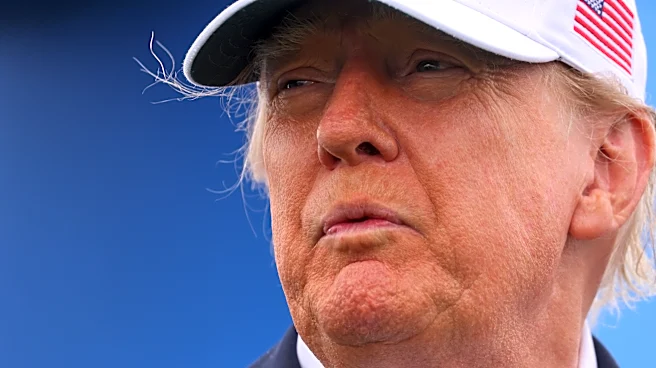
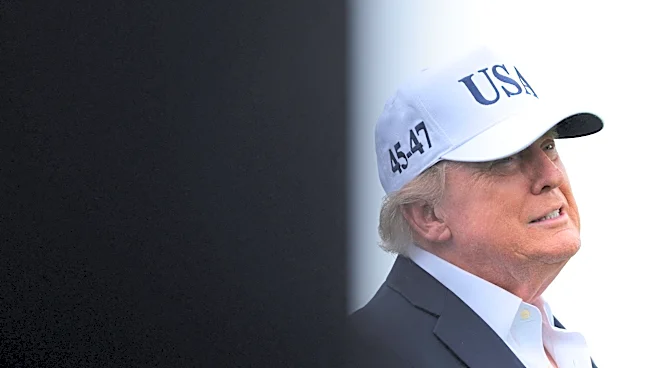
President Trump has indicated he would not oppose Chinese original equipment manufacturers (OEMs) establishing vehicle production plants in the United States. This stance comes despite existing U.S. regulations that prohibit the sale and import of connected
vehicles containing Chinese software from 2027 and hardware from 2030. These rules, finalized by the Commerce Department in 2025, apply even to vehicles manufactured in the U.S. but owned or controlled by Chinese entities. President Trump's comments, made during an interview on The Ingraham Angle, suggest a willingness to allow Chinese automakers to operate within the U.S. if they build vehicles domestically and employ American workers, drawing a parallel to Japanese automakers. This position introduces uncertainty into the continuity of U.S. automotive trade policy towards China, especially after the U.S. trade representative Jamieson Greer stated in April that the Trump administration had no plans to reverse Biden-era restrictions on Chinese vehicle technology. Meanwhile, a group representing major U.S. carmakers, including Ford, GM, Stellantis, BMW Group, Honda, Hyundai, JLR, Kia, Mazda, Mercedes-Benz, and Nissan, has urged Congress to enact a permanent ban on Chinese vehicles from the U.S. market, citing concerns about subsidized vehicles and national security.
Why It's Important?
President Trump's remarks carry significant implications for the U.S. automotive industry, trade policy, and national security. His openness to Chinese OEMs building vehicles in the U.S. could potentially lead to increased foreign investment and job creation in the manufacturing sector, aligning with his 'America First' economic policies. However, this position directly conflicts with the concerns raised by a coalition of major U.S. and international automakers, who advocate for a permanent ban on Chinese vehicles due to fears of unfair competition from subsidized products and national security risks associated with connected vehicle technology. The existing U.S. regulations on Chinese software and hardware in vehicles, set to take effect in 2027 and 2030, further complicate the landscape. If Chinese automakers were to establish U.S. production, it would necessitate a re-evaluation or potential modification of these regulations, creating a complex legal and economic environment. The debate highlights a tension between promoting domestic manufacturing and addressing national security and fair trade concerns, with potential winners being U.S. workers gaining employment and potential losers being domestic automakers facing increased competition.
What's Next?
The immediate next steps will likely involve further clarification from President Trump or his representatives regarding the specifics of his stance on Chinese automotive manufacturing in the U.S. Congress will also face pressure from the Alliance for Automotive Innovation to consider and potentially pass legislation for a permanent ban on Chinese vehicles. This could lead to a legislative battle, with proponents of domestic manufacturing clashing with those advocating for national security and fair trade. Chinese automakers may begin to explore the feasibility and strategic advantages of establishing U.S. production facilities, weighing the benefits of avoiding tariffs against the complexities of U.S. regulations and political sentiment. The Commerce Department may also need to address how its 2025 regulations on Chinese connected vehicle technology would apply to U.S.-manufactured vehicles by Chinese entities under a potential new policy. The automotive industry will closely monitor these developments, as any shift in policy could significantly impact supply chains, investment decisions, and market competition.
Beyond the Headlines
The discussion surrounding Chinese automakers in the U.S. extends beyond immediate economic and trade concerns, touching upon deeper geopolitical and technological implications. The emphasis on 'connected vehicle software and hardware bans' underscores the growing recognition of vehicles as data-gathering platforms and potential national security assets. Allowing Chinese companies to manufacture these vehicles in the U.S., even with U.S. labor, could still raise questions about data security, intellectual property transfer, and the potential for foreign influence within critical infrastructure. This situation highlights a broader global trend where economic competition is increasingly intertwined with technological sovereignty and national security. The ethical dimension of balancing economic benefits, such as job creation, with potential risks to national security and data privacy will be a central challenge. Furthermore, the debate could influence future international trade agreements and set precedents for how the U.S. approaches foreign investment in strategically important sectors, potentially leading to a redefinition of 'Made in America' in an era of globalized production and digital integration.