





What's Happening?
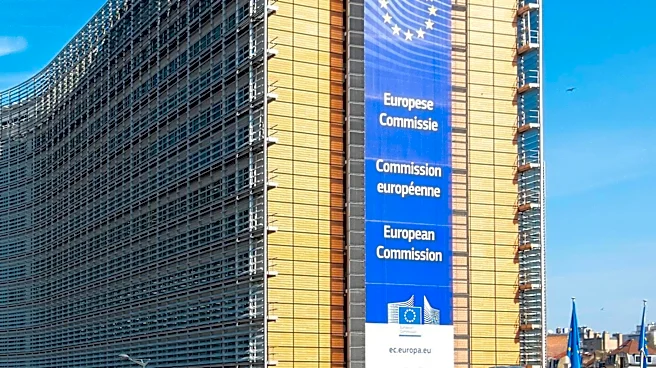
Leaders from the European Union and its member states have acknowledged the critical strategic importance of the Arctic region for both European and global security. They underscore that the European Arctic, encompassing land and maritime areas and sharing
a long external border with Russia, is an integral part of the EU. The region is undergoing rapid transformation due to intensified great power competition, the consequences of Russia’s aggression against Ukraine, China’s increased security interest, and the severe impacts of climate change. These factors are reshaping the Arctic's strategic environment. The EU aims to reinforce its position in the Arctic through enhanced preparedness, strengthening monitoring and analysis capacities, increasing maritime domain awareness using space-based capabilities, and improving information-sharing. The leaders also highlighted the economic opportunities in the Arctic, such as critical raw materials, space technologies, shipping, connectivity, and tourism, which can contribute to sustainable growth and competitiveness for those living in the region. Security in the Arctic is seen as a collective effort, with a shared commitment to preserving it as a region of peace, stability, and constructive cooperation, grounded in international law and multilateral governance.
Why It's Important?
The EU's renewed focus on the Arctic is significant because it signals a strategic shift towards a more proactive and integrated approach to a region increasingly vital for global security and economic interests. The acknowledgment of Russia as a significant and long-term threat, coupled with its ambitions to increase influence in the Arctic and its hostility towards Europe, necessitates a strengthened EU Arctic policy. This emphasis on collective security and international law aims to counter growing strategic competition that could undermine regional stability. Economically, the Arctic's potential for critical raw materials, new trade routes, and advanced technologies offers substantial opportunities for sustainable growth and competitiveness within the EU. Investing in the Arctic is framed as an investment in the overall security and prosperity of the EU, highlighting the interconnectedness of regional stability with broader European interests. The commitment to strengthening resilience through a whole-of-society security approach underscores the comprehensive nature of the challenges and opportunities in the Arctic.
What's Next?
The European Union is looking forward to an upcoming Joint Communication from the European Commission and the High Representative on a Resilient, Secure, and Peaceful Arctic. This communication is expected to outline a more strategic and proactive role for the EU in the European Arctic, committing to strengthened engagement with adequate resources and in line with evolving geopolitical realities. The EU plans to step up its actions to promote stability, sustainable development, and prosperity while safeguarding its interests. This includes increasing investment in military mobility, cross-border connectivity, and necessary infrastructure in the northernmost regions of the EU. Addressing critical needs such as transport connections, digital connectivity, and satellite technologies, as well as boosting member states' capabilities to respond to hybrid threats, will be vital for European security and defense. The development of dual-use infrastructure and the protection of critical infrastructures at land and sea are also identified as important cross-cutting priorities. The work continues, with recent summits providing valuable input for the new Arctic Strategy, which aims to create a more strategic, focused, and visible European presence in the region.
Beyond the Headlines
The EU's enhanced focus on the Arctic extends beyond immediate security and economic concerns, delving into deeper implications for environmental protection and indigenous rights. The emphasis on sustainable development and the protection of the fragile Arctic environment and ecosystems is central to the EU's policy. This includes promoting the transition to clean energy, responsible management of natural resources, and engaging Arctic Indigenous Peoples and local communities in decision-making processes. The EU reaffirms its commitment to safeguarding the rights, livelihoods, and cultures of Indigenous Peoples, as outlined in the United Nations Declaration on the Rights of Indigenous Peoples. Furthermore, the importance of Arctic scientific research and international academic and scientific cooperation is highlighted as a foundation for knowledge-based and responsible governance. This holistic approach recognizes that the long-term stability and prosperity of the Arctic are intrinsically linked to environmental stewardship, social equity, and scientific understanding, reflecting a broader ethical and cultural dimension to the region's future.