







What's Happening?
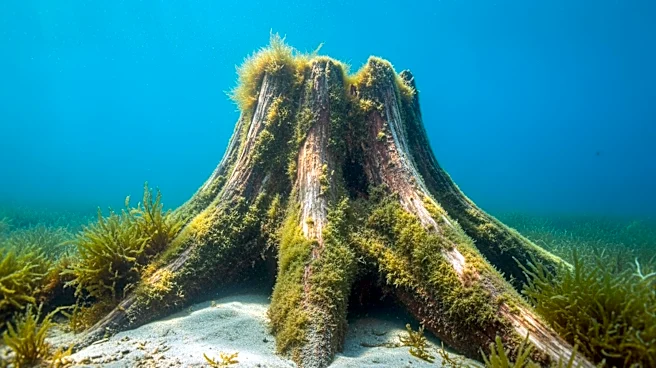
Scientists have uncovered a prehistoric forest beneath the North Sea, revealing that forests existed in Doggerland over 16,000 years ago, much earlier than previously thought. This discovery was made using sedimentary ancient DNA, which provided a detailed
picture of the environment's evolution. The study, led by the University of Warwick, found traces of oak, elm, and hazel, suggesting a rich ecosystem that supported early human communities. The findings challenge existing timelines and suggest that some species survived longer in isolated areas.
Why It's Important?
This discovery reshapes our understanding of prehistoric Europe, particularly the role of Doggerland as a habitat for early humans. The presence of forests earlier than expected suggests that the region could have supported human life and biodiversity for longer periods. This has implications for archaeological research, as it may explain the scarcity of early Mesolithic evidence in mainland Britain. The study also highlights the potential of ancient DNA analysis in uncovering historical environmental changes.
What's Next?
Further research is likely to focus on exploring other submerged landscapes to understand their historical significance. The findings could lead to new archaeological investigations in Doggerland and similar regions. Scientists may also use this data to refine models of human migration and environmental adaptation during the Ice Age.