




What's Happening?
Sandia National Laboratories has developed a miniature robot named SPIINE (Self-Propelled Interior Inspector for Non-destructive-testing Examination) to inspect underground pipes at the Hanford Site in Washington state. The Hanford Site, a decommissioned
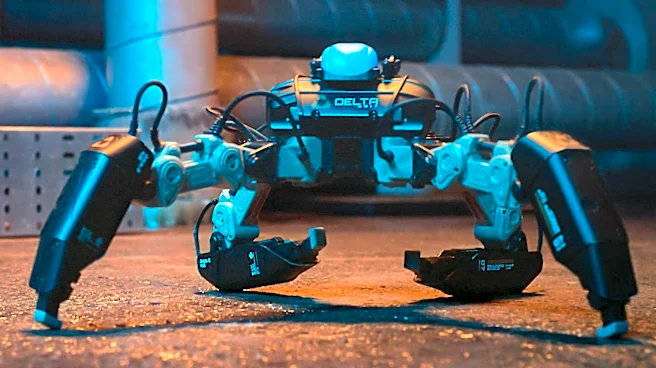
nuclear production complex, contains radioactive waste in underground storage tanks connected by a network of pipes. These pipes, some as small as 2 inches in diameter and decades old, require inspection for corrosion and damage. Traditional inspection methods, such as 'push' cameras and conventional ultrasound probes, have proven ineffective due to the pipes' small size, numerous 90-degree bends, and long distances. The SPIINE robot, measuring 2 by 8 inches, features a multi-axis body, adaptive wheels, steering capabilities, a high-resolution camera with LED lighting, and powerful motors. It is designed to navigate complex pipe networks, carry payloads like ultrasonic probes, and be controlled by a standard video game controller. The project aims to provide visual inspection and potentially measure pipe thickness to ensure the integrity of the waste transfer system.
Why It's Important?
This development is crucial for the safe and efficient management of nuclear waste at the Hanford Site, one of the most contaminated nuclear sites in the United States. The inability to effectively inspect these pipes poses significant environmental and safety risks, as undetected corrosion or damage could lead to leaks of radioactive waste. The SPIINE robot offers a cost-effective and less intrusive alternative to excavating hundreds of feet of underground pipes. By enabling thorough internal inspections, the technology helps prevent potential environmental contamination and reduces risks to workers who would otherwise be exposed to hazardous conditions. This innovation also highlights Sandia's expertise in microrobotics and its application to critical national security and environmental challenges, potentially setting a precedent for similar waste management issues at other sites.
What's Next?
The next phase for the SPIINE robot involves real-world testing at the Hanford Site. While laboratory tests have been successful, deployment in the actual environment may reveal new challenges. The Sandia team is already addressing several anticipated issues, including the development of a self-cleaning function for the robot's camera lens and pipe walls, and a fail-safe recovery system in case the robot becomes stuck. Researchers are also exploring the integration of microscale ultrasonic sensors, as conventional sensors are too large for the tight pipe bends. The team aims to perfect the robot's capabilities to ensure reliable and comprehensive inspections, which will inform critical decisions regarding the maintenance and safety of the Hanford Site's waste infrastructure. Successful deployment could lead to broader application of this technology in other hazardous environments.
Beyond the Headlines
The SPIINE robot project extends beyond immediate waste management by showcasing the broader potential of advanced robotics in hazardous environments. It underscores a shift towards using autonomous systems to perform tasks that are too dangerous, difficult, or costly for human intervention. This technology could influence future strategies for decommissioning nuclear facilities, managing industrial waste, and inspecting critical infrastructure like pipelines in various sectors. Ethically, it raises questions about the balance between technological solutions and human oversight in high-risk operations. Legally, the successful deployment of such robots could lead to new regulatory frameworks for autonomous inspection systems in sensitive environments. Culturally, it reinforces the role of national laboratories in addressing complex societal problems through scientific and engineering innovation, contributing to environmental protection and public safety.