
What's Happening?
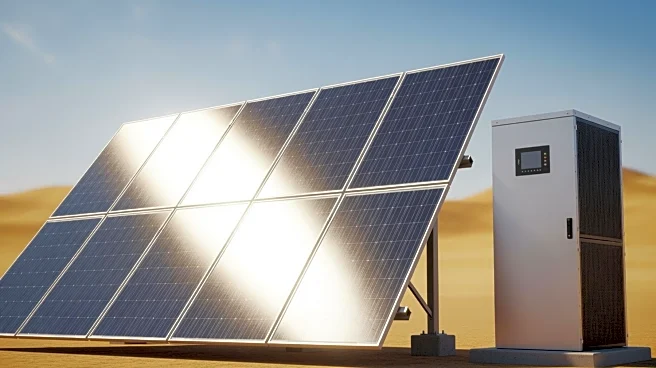
The Abu Dhabi Department of Energy has introduced a new policy allowing residents to adopt solar energy systems for self-consumption, with or without battery storage. This initiative targets the agricultural
sector initially, enabling consumers to install solar panels and store energy on-site. The policy aims to optimize electricity usage by aligning it with periods of high solar generation, thereby reducing grid demand. It also supports the Abu Dhabi Energy and Water Efficiency Strategy 2030, which seeks significant reductions in electricity and water usage. Detailed guidelines for implementation, including technical and commercial requirements, will be provided by the department.
Why It's Important?
This policy marks a significant step towards decentralized energy solutions in Abu Dhabi, promoting energy independence and sustainability. By encouraging the adoption of solar-plus-storage systems, the policy reduces reliance on the grid and enhances energy security. It also supports the emirate's environmental goals by decreasing carbon emissions and promoting efficient energy use. The initiative could serve as a model for other regions seeking to integrate renewable energy into their power systems, potentially influencing global energy policies and market trends.
What's Next?
The Abu Dhabi Department of Energy will issue comprehensive guidelines to facilitate the policy's implementation, covering metering, settlement, and approval processes. As the policy rolls out, it is expected to expand beyond the agricultural sector, potentially encompassing residential and commercial consumers. The department also plans to release a guidance manual on high-efficiency appliances, further promoting energy conservation. The success of this policy could lead to broader adoption of similar initiatives across the UAE and other countries, contributing to global efforts to transition to sustainable energy systems.