



What's Happening?
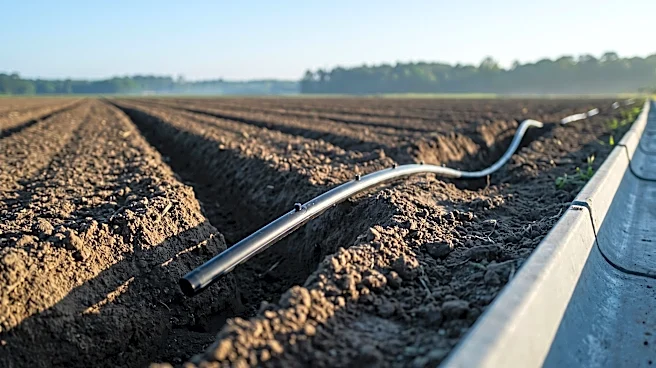
A recent study tracked the longevity and economic aspects of Shallow Subsurface Drip Irrigation (S3DI) systems across five fields in Georgia, focusing on corn and cotton rotations. The research documented the costs associated with installing, repairing,
and retrieving these irrigation systems. Key findings indicate that S3DI tubing can remain viable for at least eight years under a corn-cotton rotation. The study also highlighted various challenges, including mechanical damage from harvesting equipment and biological damage primarily caused by rodents. For instance, extensive mechanical damage occurred in one S3DI system due to cotton harvest equipment, leading to the implementation of a calibration area for GPS to prevent future incidents. Biological damage from rodents was identified as a major source of tubing issues. The research provides a detailed breakdown of annualized installation costs, which ranged from $10–$25 per acre per year, and annual repair costs, which varied from $1–$18 per acre per year across the evaluated systems. The study also examined the factors influencing retrieval costs, noting that heavier soil conditions in some locations made retrieval more expensive due to slower speeds and increased labor.
Why It's Important?
This study offers critical insights for agricultural stakeholders in the U.S., particularly in the Southeast, regarding the long-term viability and economic implications of S3DI systems. Understanding the installation, repair, and retrieval costs is crucial for farmers considering adopting or maintaining these irrigation technologies. The findings on the durability of S3DI tubing for at least eight years in corn-cotton rotations provide a valuable benchmark for investment planning. Identifying specific sources of damage, such as mechanical issues from harvesting and biological damage from rodents, allows farmers and manufacturers to develop more robust systems and management practices. The economic data, including annualized costs and partial net revenue ranges, helps farmers assess the financial returns and risks associated with S3DI. This information can guide decision-making on irrigation infrastructure, potentially leading to more efficient water use and improved crop yields in regions facing water scarcity or seeking to optimize agricultural inputs. The study's emphasis on factors like field shape influencing installation costs also provides practical guidance for optimizing system design and placement.
What's Next?
The findings from this study are likely to inform future agricultural practices and research in the U.S. Farmers and agricultural extension services may use this data to refine their S3DI implementation strategies, focusing on mitigating identified risks such as mechanical and biological damage. This could involve adopting more precise GPS guidance for field operations, exploring rodent control measures, or investing in more durable tubing materials. Manufacturers of S3DI systems may also leverage these insights to improve product design, making systems more resilient to common forms of damage and easier to retrieve. Further research could delve into more cost-effective repair methods or alternative materials that offer greater resistance to biological threats. Additionally, the study's economic analysis could be expanded to include a broader range of crops and geographical areas, providing a more comprehensive understanding of S3DI's financial viability across diverse agricultural landscapes in the U.S. The insights on the longevity of S3DI systems will also be crucial for developing long-term maintenance schedules and replacement strategies for farmers.
Beyond the Headlines
Beyond the immediate economic and practical implications, this study touches upon broader themes of sustainable agriculture and resource management in the U.S. The adoption of S3DI systems is often driven by the need for efficient water use, especially in regions prone to drought or facing increasing water regulations. By detailing the costs and challenges, the study contributes to a more realistic assessment of sustainable irrigation technologies. The emphasis on GPS guidance and precision agriculture highlights the ongoing technological evolution in farming, where data and automation play an increasingly vital role in optimizing operations and minimizing environmental impact. The challenges posed by rodents also underscore the complex interplay between agricultural practices and local ecosystems, suggesting a need for integrated pest management strategies that are both effective and environmentally sound. Ultimately, the research contributes to the long-term resilience of U.S. agriculture by providing data-driven insights into technologies that can enhance productivity while promoting responsible resource stewardship.