


What's Happening?
A new software tool named ovrlpy has been developed to improve quality control in spatial transcriptomics, a key technology in biomedical research. Created by the Berlin Institute of Health at Charité, ovrlpy is the first tool to identify cell overlaps
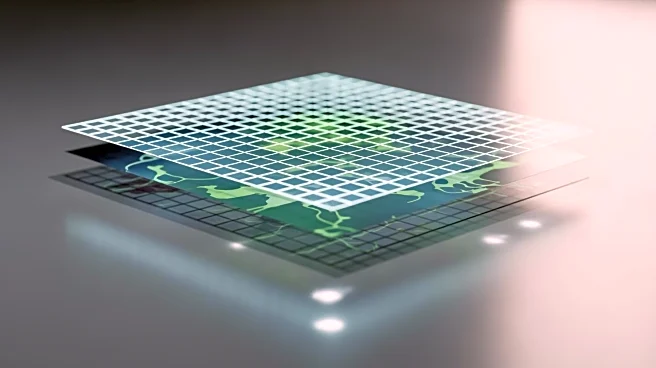
and folds in tissue sections, reducing previously unrecognized sources of misinterpretations. Spatial transcriptomics visualizes cellular activity within a tissue by mapping RNA transcripts and assigning this molecular activity to individual cells. Ovrlpy analyzes the spatial distribution of transcripts in three dimensions, detecting signal inconsistencies in areas with cell overlaps or accidental tissue folds. This advancement is crucial for ensuring the precision of subsequent bioinformatic analyses.
Why It's Important?
The development of ovrlpy is significant as it addresses a critical challenge in spatial transcriptomics by identifying hidden errors that could lead to false conclusions. By improving the accuracy of data interpretation, the tool enhances the reliability of research findings across various disciplines, including cancer research, neurology, and personalized therapy development. As spatial technologies become more prevalent in routine biomedical research, ensuring high-quality data is essential for advancing scientific knowledge and developing effective treatments. Ovrlpy's contribution to data precision could facilitate breakthroughs in understanding complex tissue architectures and functions.
What's Next?
The implementation of ovrlpy in research settings is expected to lead to more robust insights and discoveries. As spatial technologies continue to evolve, the tool may be integrated into standard practices for analyzing tissue samples, potentially influencing a wide range of biomedical research areas. Future developments could include enhancements to the software, expanding its capabilities to detect other types of errors or artifacts in tissue analyses. The ongoing collaboration between international research institutions may also lead to further innovations in spatial transcriptomics and related fields.