





What's Happening?
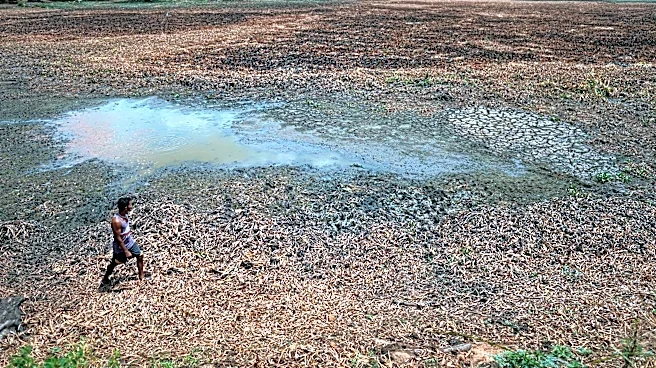
The state of Karnataka in India experienced a substantial deficit in its southwest monsoon (SWM) rainfall during the period of June 1 to September 30. Out of the 122 days of the monsoon season, 79 days recorded either nil, near nil, or deficit rainfall,
meaning 65% of this crucial period was almost dry. Only 31 days saw normal rainfall, and just 12 days received rainfall beyond normal figures. This uneven distribution and prolonged dry spells occurred during critical stages of crop growth, leading to significant agricultural losses. The state received 551 mm of rainfall against a normal of 852 mm, resulting in a 35% statewide deficit. Agro Meteorologist M.B. Raje Gowda highlighted that consistent rainfall at regular intervals is more vital for crop growth than the total quantum of rain, as crops begin to wilt after 10 days of dry weather. Low temperatures in July created high-pressure systems that pushed monsoon clouds away from southern and northern interior Karnataka, contributing to the dry conditions.
Why It's Important?
This severe monsoon deficit in Karnataka has profound implications for the state's economy and food security. Agriculture, which heavily relies on monsoon rains, accounts for a significant portion of the state's annual rainfall (74%). The estimated crop losses due to drought in the kharif season amount to ₹46,323 crore, affecting not only agricultural crops but also horticulture and spice crops. This financial blow impacts farmers' livelihoods, potentially leading to increased rural distress and economic instability within the region. The uneven distribution of rainfall, rather than just the total amount, underscores the vulnerability of agricultural practices to changing weather patterns. The situation highlights the need for robust agricultural insurance schemes that consider rainfall distribution as a factor for compensation, as suggested by experts like Prof. Gowda. Such events can also influence national food prices and supply chains, potentially leading to broader economic consequences.
What's Next?
In the immediate future, authorities in Karnataka will likely focus on drought relief measures and supporting affected farmers. This could include financial aid, crop insurance payouts, and strategies to mitigate future losses. The suggestion by Agro Meteorologist M.B. Raje Gowda to include 'distribution of rains' in crop insurance schemes is a critical policy consideration that may be explored to better protect farmers from the impacts of uneven rainfall. Long-term strategies might involve investing in more resilient agricultural practices, such as drought-resistant crops and improved irrigation systems, to reduce dependence on monsoon variability. There may also be increased research into understanding and predicting monsoon patterns more accurately to provide better early warnings for farmers. The substantial crop losses could also lead to discussions about food security and potential government interventions to stabilize agricultural markets.
Beyond the Headlines
The monsoon deficit in Karnataka underscores a broader challenge faced by regions heavily reliant on seasonal rainfall, particularly in the context of changing climate patterns. While the immediate cause was attributed to low temperatures creating high-pressure systems, such events could become more frequent or intense due to global climate shifts. This situation highlights the intricate relationship between atmospheric conditions and agricultural productivity, revealing the fragility of food systems in the face of climatic variability. The economic impact extends beyond direct crop losses, potentially affecting rural employment, migration patterns, and social stability. Furthermore, the call for incorporating rainfall distribution into crop insurance policies points to an evolving understanding of climate risk in agriculture, moving beyond simple rainfall totals to more nuanced metrics. This could set a precedent for how agricultural insurance and climate adaptation strategies are designed in other vulnerable regions globally.