







What's Happening?
A new master framework for the downtown Cleveland lakefront has been unveiled, proposing a significant transformation of the 50 acres currently occupied by Huntington Bank Field. The plan, developed by the North Coast Waterfront Development Corporation
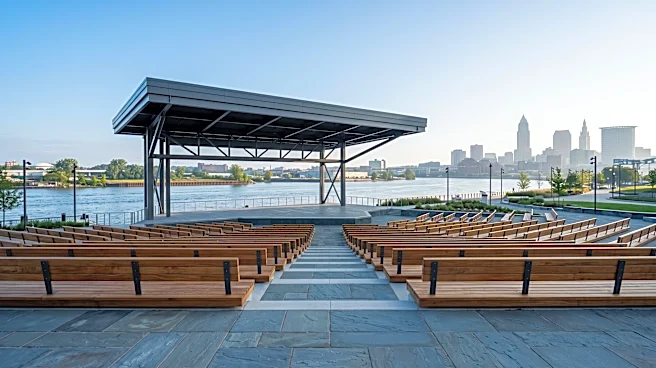
(NCWDC), a non-profit established by the city, envisions over 300,000 square feet of parks and public spaces. The current Cleveland Browns stadium is slated for removal and will be replaced by 'The Field,' a public park retaining the shape of a football field. A pedestrian-only corridor, 'The Diagonal,' will cut through the development, leading to a new Lake Erie Plaza. The framework also includes a 'ribbon' of public space with features like an urban beach, amphitheater, markets, and gardens. This plan accounts for the Browns' impending move to Brook Park and sets up parcels for future development, including apartments, hotels, and office buildings. The NCWDC emphasizes that this is a guideline, not a fixed plan, with development expected to span two decades or more.
Why It's Important?
This ambitious lakefront development plan holds significant implications for Cleveland's urban landscape, economy, and public life. By transforming a large area currently dominated by a stadium and surface parking into extensive public parks and mixed-use spaces, the city aims to enhance accessibility to the lakefront for all residents. The project could stimulate economic growth through new construction, increased tourism, and the creation of residential and commercial opportunities. The emphasis on public spaces and pedestrian access aligns with modern urban planning trends focused on livability and sustainability. The removal of the stadium and its replacement with a park also signifies a shift in urban priorities, moving towards more integrated and community-centric development rather than single-purpose large-scale venues. This initiative could serve as a model for other U.S. cities looking to revitalize their waterfronts.
What's Next?
The NCWDC shared the framework with public officials and will continue to seek feedback from residents, building on thousands of comments already gathered through surveys and public meetings. The development is projected to be a two-decade process or longer, with the NCWDC focusing initially on building public spaces and preparing the land for future developments. A key component, the lakefront connector project, which involves a land bridge connecting downtown to the waterfront and converting the Shoreway into a boulevard, is slated to begin by the end of 2027. Discussions are ongoing regarding potential changes to the land bridge's design, especially in light of proposals to expand the Huntington Convention Center. The project has already secured $130 million in federal and state grants, indicating initial financial backing for the infrastructure phase.
Beyond the Headlines
Beyond the immediate physical transformation, this lakefront development represents a long-term vision for Cleveland's identity and its relationship with Lake Erie. The plan's emphasis on public access and green spaces reflects a growing understanding of the importance of urban nature and recreational opportunities for public health and quality of life. The decision to replace a major sports stadium with a public park, while honoring its legacy, signals a potential cultural shift towards prioritizing communal spaces over exclusive venues. This project could foster a stronger sense of community ownership and pride, potentially attracting new residents and businesses to the city. The multi-decade timeline also highlights the need for sustained political will and community engagement to see such a transformative vision through to completion, navigating potential challenges in funding, design, and public consensus over time.