







What's Happening?
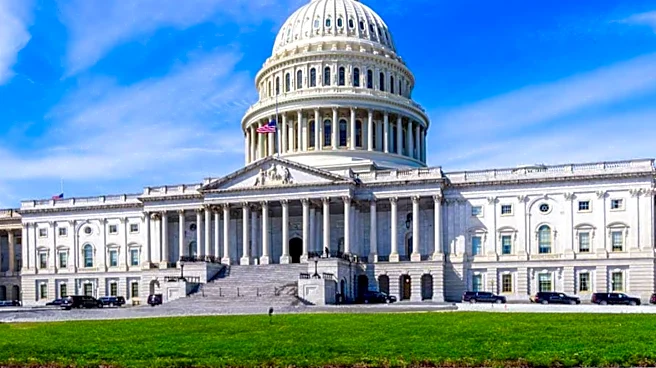
The Brookings Institution has released the latest update to its 'Vital Statistics on Congress,' a comprehensive dataset providing insights into the U.S. legislative body. Spearheaded by Brookings scholar Molly E. Reynolds, this update includes over 90
tables of data across eight chapters, with the most recent information collected in April 2026. The project, which began as a joint effort with the American Enterprise Institute and the Campaign Finance Institute, transitioned online in 2013 after years of print publication. The updated data is available for free download in various formats, including .csv, .xlsx, and .pdf. The institution emphasizes its commitment to quality, independence, and impact, with each publication reflecting the sole views of its author(s). The data covers a wide range of topics related to Congress, including demographics of members, congressional elections, campaign finance, committee data, staff and operating expenses, legislative productivity, federal budget actions, and political polarization.
Why It's Important?
The 'Vital Statistics on Congress' serves as a critical resource for policymakers, researchers, and the public seeking to understand the functioning and evolution of the U.S. Congress. By providing detailed, nonpartisan data on various aspects of congressional operations, the update enables informed analysis of legislative trends, electoral dynamics, and the financial landscape of political campaigns. This information is crucial for assessing the effectiveness of governance, identifying areas for reform, and understanding the impact of political decisions on American society. The availability of this data in multiple formats and at no cost democratizes access to essential governmental statistics, fostering greater transparency and accountability in the U.S. political system. It also supports academic research and public discourse on the state of American democracy and its representative institutions.
What's Next?
The Brookings Institution encourages the use of this updated data for further analysis and invites feedback and questions from users. Individuals interested in future updates can sign up for email notifications regarding new data releases. The ongoing maintenance and updating of 'Vital Statistics on Congress' suggest a continued commitment to providing current and historical data on the legislative branch. This continuous effort will likely inform future policy debates, academic studies, and public understanding of congressional activities, particularly as new political cycles and legislative challenges emerge. The project's collaborative origins and its transition to an online format indicate a forward-looking approach to data dissemination and engagement with a broader audience.
Beyond the Headlines
The 'Vital Statistics on Congress' project highlights the enduring importance of data-driven research in understanding complex political systems. Its long history, from print publications to an online platform, reflects the evolving methods of information dissemination and the increasing demand for accessible, comprehensive data. The project's emphasis on nonpartisan research underscores the value of objective analysis in a politically charged environment. By meticulously tracking changes in congressional demographics, campaign finance, and legislative productivity, the data can reveal subtle shifts in political power, representation, and the influence of various stakeholders. This deep dive into congressional mechanics offers a foundational understanding of the institutional challenges and opportunities facing American democracy, extending beyond immediate news cycles to illuminate long-term trends and their societal implications.