




What's Happening?
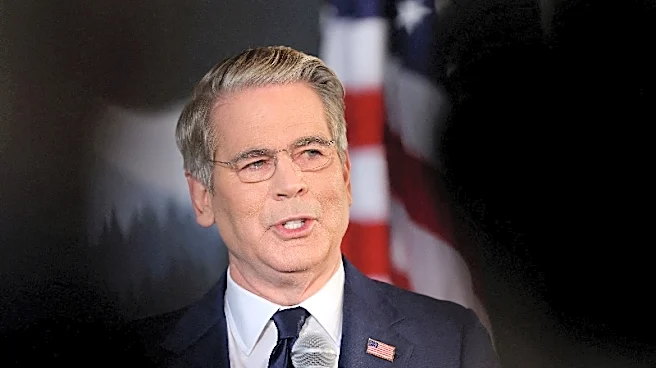
Representative Virginia Foxx (R-NC) is set to chair a House Rules Committee oversight hearing for the 119th Congress. The hearing will address several key legislative items, including H.J. Res. 210 and H.J. Res. 213, which aim to disapprove Environmental
Protection Agency (EPA) rules. H.J. Res. 210 specifically targets an EPA rule concerning California's nonroad engine pollution-control standards for ocean-going vessels at berth, where the EPA authorized amendments to the California Air Resources Board's (CARB) regulation. Similarly, H.J. Res. 213 focuses on the EPA's decision regarding California's Commercial Harbor Craft regulation, where the EPA partially granted CARB's request for amendments adopted in 2022. Both resolutions operate under the Congressional Review Act, allowing lawmakers to reject agency rules. Additionally, the hearing will cover H.R. 9576, the National Fraud Enforcement Division Act of 2026, and H.R. 10326, the Preventing Rip-offs and Obtaining Oversight of Funds Act, alongside H.R. 5334, the Lindsey O. Graham Sanctioning Russia and Iran Act of 2026, with Senate amendments.
Why It's Important?
This hearing is a significant early indicator of how aggressively the 119th Congress intends to utilize its disapproval authority against environmental regulations, particularly those that states have pursued and the EPA has approved. The potential disapproval of EPA rules concerning California's nonroad engine pollution-control standards could have far-reaching implications for environmental policy and state-level regulatory autonomy. If Congress successfully overturns these EPA authorizations, it could set a precedent for federal intervention in state environmental initiatives, potentially undermining efforts to address pollution at a local level. Furthermore, the inclusion of fraud enforcement legislation, such as the National Fraud Enforcement Division Act and the Preventing Rip-offs and Obtaining Oversight of Funds Act, highlights a congressional focus on combating financial misconduct and ensuring accountability in public funds. The discussion of the Lindsey O. Graham Sanctioning Russia and Iran Act also underscores ongoing geopolitical concerns and the legislative branch's role in foreign policy and international sanctions.
What's Next?
The House Rules Committee hearing will proceed with discussions on the aforementioned resolutions and bills. The outcome of this hearing will determine the immediate future of the EPA rules concerning California's nonroad engine pollution-control standards for ocean-going vessels and commercial harbor craft. If the resolutions to disapprove these rules advance, it could lead to a direct challenge to the EPA's authority and potentially force a reevaluation of environmental regulations. For the fraud enforcement bills, the hearing will likely involve testimony and debate, moving them closer to potential passage or further amendment. The Lindsey O. Graham Sanctioning Russia and Iran Act, with its Senate amendments, will also be subject to scrutiny, potentially influencing U.S. foreign policy and economic relations with the targeted nations. The hearing serves as a critical step in the legislative process, shaping the agenda and priorities of the 119th Congress on environmental policy, fraud enforcement, and international sanctions.
Beyond the Headlines
The hearing's focus on disapproving EPA rules through the Congressional Review Act reveals a deeper tension between federal oversight and state environmental initiatives. This mechanism allows Congress to overturn regulations with a simple majority, potentially bypassing more extensive legislative processes. The implications extend beyond specific environmental standards, touching upon the balance of power between federal agencies, state governments, and the legislative branch. Should Congress frequently use this authority, it could lead to increased regulatory uncertainty and a more politicized approach to environmental protection. Moreover, the emphasis on fraud enforcement legislation reflects a broader societal concern about financial integrity and the protection of public resources. The combination of environmental and fraud-related bills on the agenda suggests a multifaceted approach by Congress to address both regulatory burdens and economic accountability, potentially signaling a shift in legislative priorities towards greater federal control over state-level environmental decisions and enhanced scrutiny of financial practices.