



What's Happening?
The provided sources do not offer a definitive answer regarding a specific 'Tokyo summer harvest' event. While one source mentions seasonal scenery in Showa Kinen National Park, it does not elaborate on a 'summer harvest.' Another source details various
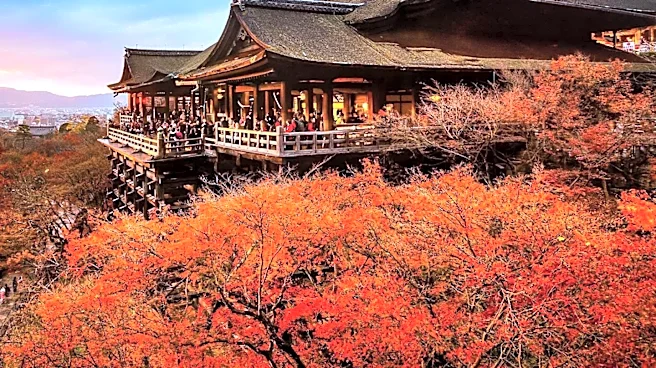
Japanese festivals and seasonal attractions, including autumn foliage and events in September, October, and November, but does not specify a 'summer harvest' festival in Tokyo. The information available focuses on general seasonal offerings and specific autumn events, such as the golden ginkgo avenue at Jingu Gaien in late autumn and various festivals like Jidai Matsuri and the Kurama Fire Festival in October. The sources highlight the availability of seasonal vegetables and fruits from across Japan, as well as processed foods, jams, and flowers, but this is presented as a general offering rather than a specific 'summer harvest' event in Tokyo.
Why It's Important?
The absence of specific information on a 'Tokyo summer harvest' event in these sources is important for individuals or businesses planning to engage with or market around such an event. For tourists, this means that if they are specifically looking for a 'summer harvest' experience in Tokyo, they may need to seek alternative information or adjust their expectations based on the available details. For agricultural businesses or food vendors, understanding the presence or absence of such a prominent event could influence their marketing strategies and participation in local markets. The focus on autumn foliage and festivals in the provided texts suggests that these are more prominent seasonal attractions, potentially diverting attention and resources from summer-specific harvest celebrations. This highlights the need for clear and specific event information for effective planning and engagement within the tourism and agricultural sectors.
What's Next?
Given the lack of specific information, individuals interested in a 'Tokyo summer harvest' would need to conduct further research beyond these sources. This could involve consulting official Tokyo tourism websites, local agricultural associations, or event calendars that specialize in seasonal activities. For those planning travel or business ventures, it would be prudent to verify the existence and details of any such event directly with local authorities or event organizers. Without concrete information, it is difficult to predict any direct consequences or next steps related to a 'Tokyo summer harvest.' However, the existing emphasis on autumn events suggests that future promotional efforts for Tokyo's seasonal attractions may continue to prioritize the well-established autumn foliage and festival seasons.
Beyond the Headlines
The inquiry into a 'Tokyo summer harvest' touches upon the broader cultural and economic significance of seasonal events in Japan. While the sources highlight the importance of autumn foliage and festivals, the concept of a 'summer harvest' could represent a different facet of Japanese culture, potentially focusing on local produce and community-based agricultural celebrations. The lack of explicit mention might indicate that such events are either less formalized, more localized, or simply not as widely promoted to international audiences as the more visually dramatic autumn spectacles. This could also reflect a difference in how 'harvest' is perceived and celebrated in urban versus rural settings in Japan, with Tokyo's urban environment potentially leading to different types of seasonal celebrations compared to more agricultural regions.