


What's Happening?
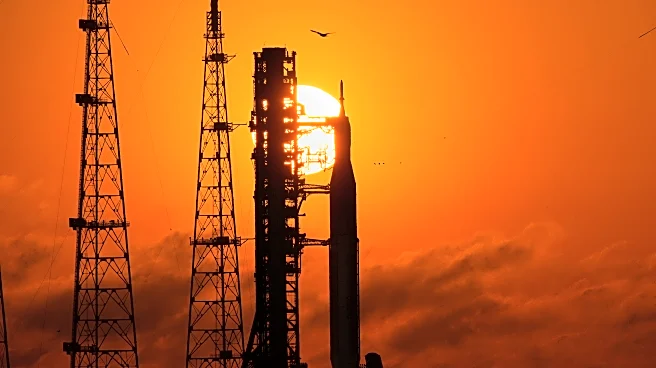
NASA is set to launch the Artemis 2 mission, marking the first time in over 50 years that humans will travel beyond Earth's orbit. The mission is scheduled for April 1, with a launch window starting at 6:24 p.m. EDT from Kennedy Space Center in Florida.
The four-person crew, including NASA Commander Reid Wiseman, Pilot Victor Glover, Mission Specialist Christina Koch, and Canadian astronaut Jeremy Hansen, will embark on a 10-day mission around the Moon. This mission aims to test the Orion spacecraft's life support systems, paving the way for a future crewed lunar landing. The launch is part of NASA's broader Artemis program, which seeks to return humans to the Moon and eventually to Mars.
Why It's Important?
The Artemis 2 mission is a significant step in NASA's long-term goals of lunar exploration and establishing a sustainable human presence on the Moon. By testing the Orion spacecraft's systems with a crew aboard, NASA is ensuring the safety and reliability of future missions, including a planned lunar landing. This mission also represents a renewed commitment to space exploration, potentially inspiring technological advancements and international collaboration. The success of Artemis 2 could bolster U.S. leadership in space exploration and stimulate interest in STEM fields among younger generations.
What's Next?
Following the Artemis 2 mission, NASA plans to continue its Artemis program with subsequent missions, including a crewed lunar landing as early as 2028. The data and experience gained from Artemis 2 will inform these future missions, helping to refine spacecraft systems and mission protocols. Additionally, NASA's continued collaboration with international partners, such as the Canadian Space Agency, may expand opportunities for global participation in lunar exploration.