
What's Happening?
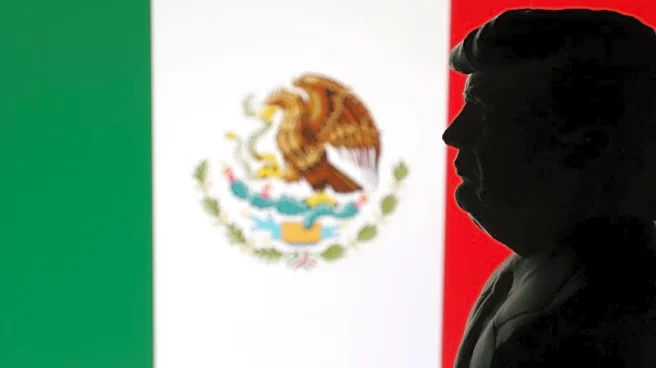
Mexico is set to implement new tariffs on imports from several Asian countries, including China, starting Thursday. The measure, approved by Congress, will raise tariffs up to 35% on countries without
free trade agreements with Mexico. This move is expected to impact thousands of products, including automobiles, textiles, and steel, with China bearing the greatest impact. The Mexican government, led by President Claudia Sheinbaum, states that the tariffs aim to bolster domestic production and address trade imbalances. However, the decision has faced opposition from China and some domestic industries concerned about rising costs.
Why It's Important?
The new tariffs represent a significant shift in Mexico's trade policy, aligning more closely with the United States' stance on Chinese imports. This move could strengthen Mexico's economic ties with the US, particularly in light of the upcoming review of the US-Mexico-Canada trade agreement (USMCA). By imposing these tariffs, Mexico aims to protect domestic industries and jobs, while also increasing government revenue. However, the decision could strain relations with China and other affected countries, potentially leading to trade disputes and impacting global supply chains.
What's Next?
As the tariffs take effect, affected countries may seek to negotiate with Mexico to mitigate the impact on their exports. The Mexican government will need to balance domestic economic interests with international trade relations, particularly with China. The upcoming USMCA review will be a critical juncture for Mexico, as it seeks to maintain favorable trade terms with its North American partners. Observers will be watching for any retaliatory measures from China and how Mexico navigates these complex trade dynamics.