





What's Happening?
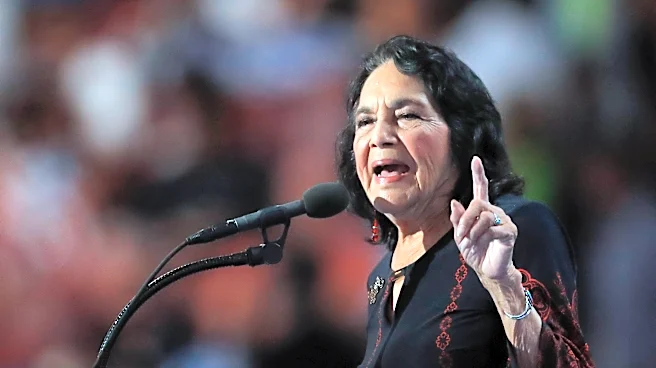
U.S. Representative Gabe Vasquez, a Democratic representative for New Mexico District 2, paid tribute to civil rights and labor icon Dolores Huerta following her death at the age of 96. Representative Vasquez described Huerta as 'one of the most formidable
champions of civil rights and workers’ rights in American history.' Huerta, born in Dawson, New Mexico, co-founded the farmworker movement alongside Cesar Chavez and was instrumental in popularizing the rallying cry, 'Sí, se puede.' Her passing prompted widespread tributes from political leaders across New Mexico, including Governor Michelle Lujan Grisham, U.S. Representative Melanie Stansbury, U.S. Senator Ben Ray Luján, and U.S. Senator Martin Heinrich, all acknowledging her profound impact on labor rights and social justice. Governor Lujan Grisham had previously signed legislation in 2023 establishing April 10 as Dolores Huerta Day in New Mexico.
Why It's Important?
The recognition by Representative Vasquez and other New Mexico leaders underscores the enduring legacy of Dolores Huerta in American civil rights and labor movements. Her work significantly shaped policies and public perception regarding farmworkers' rights, women's rights, and immigrant communities. Her advocacy led to tangible improvements in working conditions and wages for countless individuals, demonstrating the power of grassroots organizing and persistent activism. The tributes from across the political spectrum highlight her universal appeal and the non-partisan respect for her contributions to social justice. Her life's work continues to inspire new generations of activists and policymakers, reinforcing the importance of fighting for marginalized communities and ensuring that their voices are heard in the national discourse. The establishment of Dolores Huerta Day in New Mexico further solidifies her place in the state's history and serves as a reminder of her impact.
What's Next?
The passing of Dolores Huerta is likely to prompt continued reflection on her contributions and the ongoing challenges in civil rights and labor. Her legacy will undoubtedly be invoked in future discussions concerning workers' rights, immigration reform, and social justice initiatives. Political leaders and advocacy groups may draw upon her philosophy and achievements to galvanize support for contemporary causes. Educational institutions and community organizations are also expected to continue honoring her memory through events, curricula, and public awareness campaigns, particularly in New Mexico where her roots are strong. The annual observance of Dolores Huerta Day on April 10 will serve as a recurring platform to commemorate her life and work, ensuring that her influence persists in public consciousness and inspires future generations to engage in civic action.
Beyond the Headlines
Dolores Huerta's impact extends beyond specific legislative victories; she cultivated a cultural shift in how society views labor and civil rights. Her rallying cry, 'Sí, se puede' (Yes, we can), became a powerful symbol of hope and empowerment, transcending language barriers and inspiring movements globally. Her life exemplified the ethical imperative of standing up for the underserved and unheard, challenging systemic inequalities, and advocating for human dignity. The widespread tributes from diverse political figures underscore the profound moral authority she commanded. Her legacy serves as a critical reminder that social change often originates from persistent, organized efforts by individuals and communities, highlighting the enduring power of collective action and the importance of visionary leadership in the pursuit of justice.