
What's Happening?
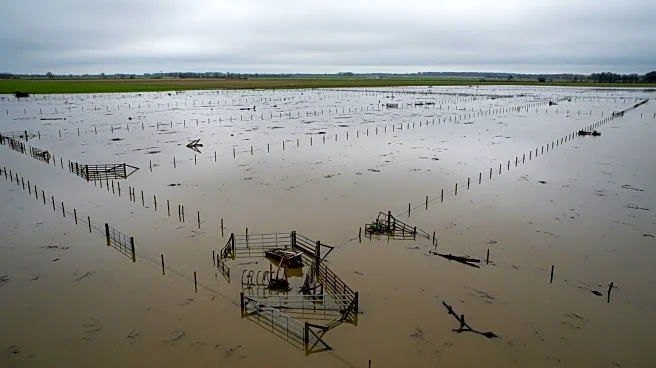
In Limpopo, South Africa, relentless torrential rains have caused severe flooding, devastating farmlands and rural communities. The flooding has resulted in the loss of over 20 lives and significant damage
to agricultural operations in the Mopani and Vhembe districts. Farmers have reported extensive crop losses, with fields submerged and infrastructure destroyed. Livestock losses have also been significant, with many animals drowned or missing. The flooding has forced hundreds of residents to evacuate their homes, seeking shelter in community facilities. The National Disaster Management Centre has declared a national disaster in several provinces, including Limpopo, due to the widespread impact of the floods.
Why It's Important?
The flooding in Limpopo highlights the vulnerability of agricultural communities to extreme weather events, which are becoming more frequent due to climate change. The destruction of crops and livestock not only affects the immediate livelihoods of farmers but also has broader implications for food security and the local economy. The loss of infrastructure and the halt in farming operations could lead to long-term economic challenges for the region. The situation underscores the need for effective disaster management and climate adaptation strategies to support affected communities and mitigate future risks.
What's Next?
The Limpopo Department of Agriculture and Rural Development is working with the provincial disaster management unit to assess the damage and provide relief to affected farmers. The government has urged farmers to report damages to facilitate assistance. Humanitarian organizations are providing food parcels and temporary accommodation to displaced residents. The ongoing response will focus on rehabilitation and support for rebuilding agricultural operations. The situation calls for increased awareness and action on climate change adaptation to prevent similar disasters in the future.
Beyond the Headlines
The flooding in Limpopo serves as a stark reminder of the broader impacts of climate change on vulnerable communities. It highlights the need for comprehensive climate policies and investment in resilient infrastructure to protect against future disasters. The event also raises ethical questions about the responsibility of governments and industries to address climate change and support affected populations. Long-term solutions will require collaboration between government, industry, and civil society to build sustainable and resilient communities.