

What's Happening?
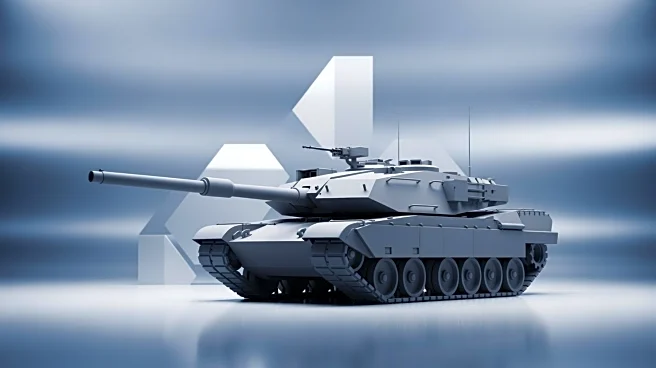
The Croatian Ministry of Defense has signed a contract to purchase 44 Leopard 2A8 tanks from Germany, valued at approximately €1.5 billion ($1.8 billion). The agreement was finalized by Croatian Deputy Prime Minister and Defense Minister Ivan Anušić,
alongside German Chancellor Friedrich Merz and Croatian Prime Minister Andrej Plenković, during an official visit to Berlin. This acquisition is part of the European Union's Security Action For Europe (SAFE) scheme, which provides low-cost loans to member states for defense acquisitions. The EU has allocated a debt fund of €150 billion to address critical capability gaps in military equipment among its members. Croatia plans to transition from Eastern to Western military technology, strengthening its defense partnership with Germany. The Leopard tanks are expected to be delivered to the Croatian land forces between 2028 and 2030.
Why It's Important?
This purchase marks a significant shift in Croatia's military strategy, moving away from Eastern military technology towards Western systems. The acquisition of Leopard tanks enhances Croatia's defense capabilities and aligns it with other NATO countries using similar technology, such as the Czech Republic and Lithuania. The deal also underscores the EU's commitment to bolstering the defense capabilities of its member states through financial support, ensuring they can address modern security challenges. For Germany, this agreement strengthens its defense industry and solidifies its role as a key military supplier within Europe. The broader impact includes increased military interoperability among NATO allies, which is crucial for collective security in the region.
What's Next?
The delivery of the Leopard tanks is scheduled between 2028 and 2030, during which Croatia will continue to integrate Western military technology into its armed forces. This transition may involve training programs for Croatian military personnel to operate and maintain the new equipment. Additionally, the partnership with Germany could lead to further defense collaborations, potentially involving joint military exercises or additional equipment purchases. The EU's SAFE scheme may continue to facilitate similar acquisitions by other member states, further enhancing the collective defense posture of the European Union.