

What's Happening?
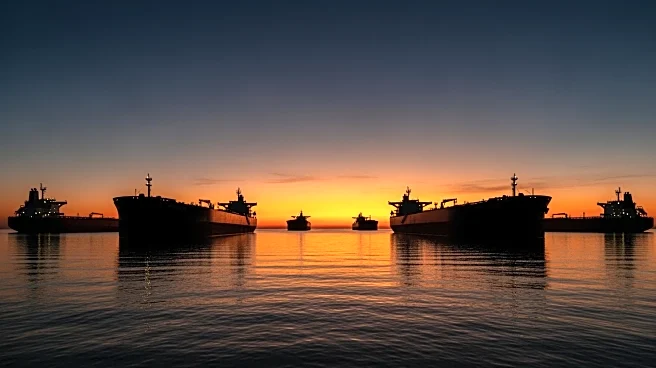
Leading P&I clubs have suspended war risk insurance for tankers transiting the Strait of Hormuz, causing a significant drop in tanker traffic through this strategic waterway. The decision comes amid heightened tensions and uncertainty regarding potential
Iranian attacks, making the risk too high for tanker owners. As a result, maritime tracking platforms report virtually no tanker transits through the strait. The withdrawal of insurance coverage is set to take effect on March 5, affecting the Arabian Gulf and the Gulf of Oman. This move has led to the designation of the area as a high-risk zone, triggering additional pay and rights for seafarers.
Why It's Important?
The suspension of war risk insurance in the Strait of Hormuz has significant implications for global energy markets and maritime security. The strait is a critical chokepoint for oil transportation, and the halt in tanker traffic could disrupt global oil supplies and increase prices. The decision by insurers reflects the heightened geopolitical risks in the region, which could have broader economic and security implications. The designation of the area as a high-risk zone also highlights the increased dangers faced by seafarers and the need for enhanced security measures.
What's Next?
The situation in the Strait of Hormuz will require close monitoring by global stakeholders, including governments, shipping companies, and insurers. Efforts to negotiate a resolution to the tensions in the region could help restore confidence and resume normal shipping operations. In the meantime, companies may need to explore alternative routes or risk mitigation strategies to ensure the continued flow of energy supplies.