

What's Happening?
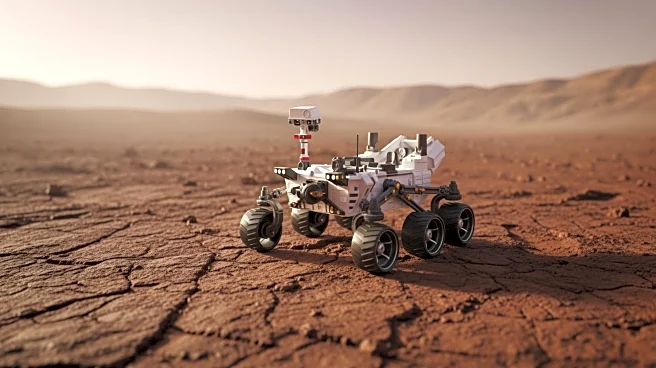
A new study has modeled the photoprotection of ultraviolet C (UVC) radiation by ferric ions (Fe3+) in ancient Martian lakes. The research suggests that high concentrations of Fe3+ in these lakes could have absorbed harmful UVC radiation, potentially allowing
microorganisms to survive. The study used a model to estimate the viability of microorganisms in Fe3+-rich solutions, demonstrating that such environments could protect life forms from lethal UVC doses. This model provides insights into the habitability of ancient Martian environments, enhancing the understanding of potential life-supporting conditions on Mars.
Why It's Important?
The study's findings are crucial for astrobiology, as they offer a new perspective on the potential habitability of ancient Martian lakes. By demonstrating that Fe3+ could protect microorganisms from UVC radiation, the research supports the possibility that life could have existed on Mars under certain conditions. This enhances the scientific community's ability to assess past habitability on Mars and guides future exploration missions in identifying promising sites for the search for past life. Understanding these protective mechanisms is vital for developing strategies to detect biosignatures on Mars and other planetary bodies.