





What's Happening?
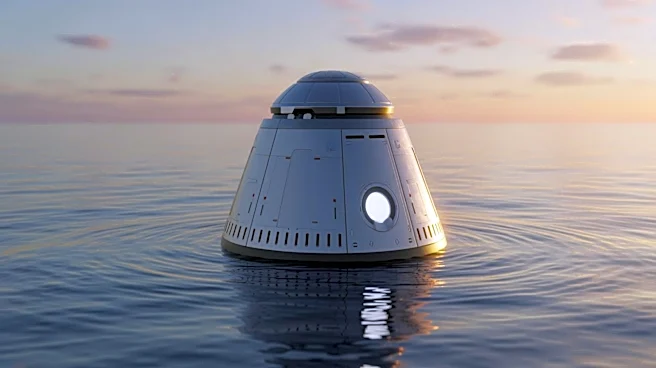
The Artemis II mission concluded with the safe return of its crew, thanks in part to the efforts of four U.S. Navy sailors. The sailors, part of the dive medical team, were the first to open the Orion capsule upon its return to Earth, conducting initial
medical assessments and assisting the astronauts out of the capsule. The crew, consisting of Commander Reid Wiseman, Pilot Victor Glover, and Mission Specialists Christina Koch and Jeremy Hansen, completed a 10-day mission that involved flying around the Moon. The mission marked NASA's first crewed lunar flyby in 50 years.
Why It's Important?
The involvement of the U.S. Navy in the Artemis II mission highlights the importance of collaboration between military and civilian agencies in space exploration. The Navy's expertise in dive medicine and recovery operations was crucial in ensuring the safety of the astronauts upon their return to Earth. The successful completion of Artemis II sets the stage for future missions, including Artemis III, which will involve landing on the Moon's surface. The mission also demonstrates the capabilities of the Orion spacecraft and the Space Launch System (SLS), paving the way for more ambitious lunar exploration.
What's Next?
With Artemis II complete, NASA is now preparing for Artemis III, which will test docking capabilities with commercial lunar landers. This mission will be crucial for landing astronauts on the Moon and establishing a lunar base. NASA plans to continue developing the technology and infrastructure needed for sustained lunar exploration, with the goal of eventually sending humans to Mars. The success of Artemis II has set the stage for these ambitious plans, and NASA is working with international partners to achieve them.