




What's Happening?
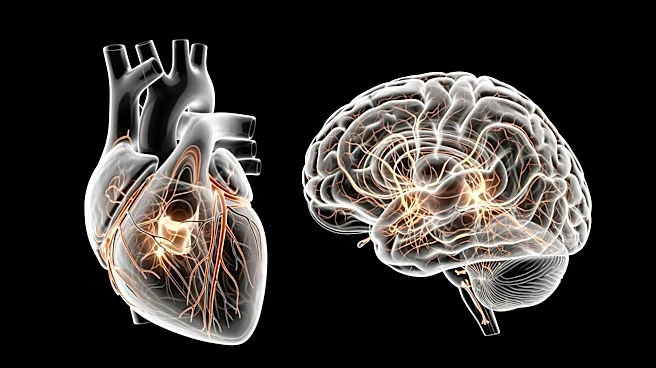
A groundbreaking project known as the Human Organ Atlas (HOA) has been developed, providing an unprecedented view of the human body from entire organs down to cellular structures. This project utilizes a technique called hierarchical phase-contrast tomography
(HiP-CT), which employs X-rays generated by a high-energy particle accelerator to achieve a level of detail 50 times thinner than a human hair. The HOA aims to democratize scientific data by offering a comprehensive collection of images that exceed one terabyte in size. This resource is intended for researchers, doctors, educators, and anyone interested in the human body's structure. The project has already imaged 87 organs from 54 donors, revealing new insights into diseases such as osteoarthritis and heart disease. The HOA is expected to enhance medical training, education, and the development of machine learning models for improved disease detection and treatment strategies.
Why It's Important?
The Human Organ Atlas represents a significant advancement in medical imaging, offering a new gold standard for understanding human anatomy. By providing detailed images of organs and cellular structures, the HOA has the potential to transform medical education and research. It allows for a deeper understanding of disease pathways and could lead to more effective treatment strategies. The use of this data in training AI models could improve disease detection and patient outcomes. Additionally, the HOA's ability to visualize the impact of conditions like high blood pressure across different organ systems could lead to more comprehensive approaches to healthcare. This project not only enhances scientific knowledge but also has the potential to engage the public in understanding human physiology.
What's Next?
The Human Organ Atlas is continuously being updated, with plans to expand its capabilities. Researchers aim to develop the technique to image complete human bodies at even higher resolutions, potentially transforming the study of anatomy. This could lead to new discoveries in disease mechanisms and treatment options. The ongoing collaboration among scientists and medics worldwide is expected to yield further insights into various diseases. As the HOA becomes more widely used, it may also influence public science engagement and education, fostering a greater appreciation for the complexities of the human body.
Beyond the Headlines
The Human Organ Atlas not only provides a detailed view of human anatomy but also raises ethical and cultural considerations regarding the use of donor organs for research. The project's potential to train AI models highlights the growing intersection of technology and healthcare, prompting discussions about data privacy and the ethical use of AI in medicine. Additionally, the HOA's ability to visualize rare pathologies and common diseases alike could lead to a more inclusive understanding of health conditions, potentially reducing stigma and increasing awareness.