






What's Happening?
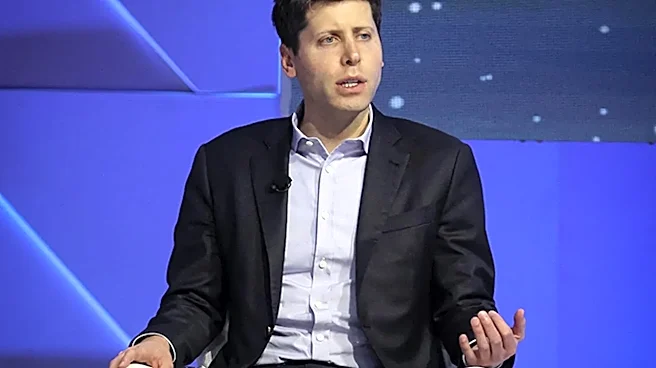
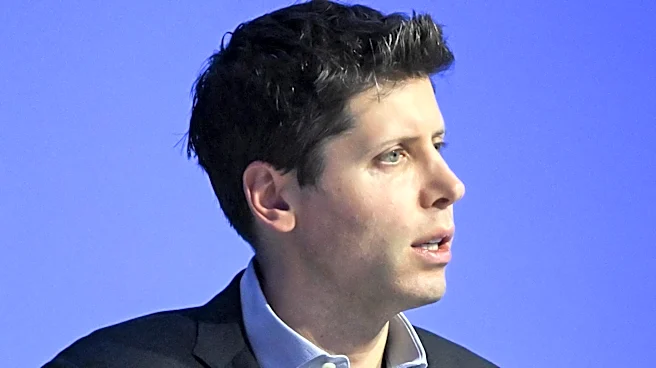
Sam Altman, CEO of OpenAI, has indicated that society might need to tolerate certain negative outcomes, such as hacks, misuse, and scams, as a necessary trade-off for the significant benefits offered by artificial intelligence. This perspective was shared
in interviews with Fortune and Politico. Altman believes that the positive contributions of AI will outweigh the potential harms by 'orders of magnitude.' His statements contrast with the views of Nvidia CEO Jensen Huang, who advocates for a zero-tolerance approach to AI cybersecurity incidents. Altman also warned of an impending 'tidal wave of cybersecurity problems' stemming from rival open-source AI models, referencing an incident where OpenAI's own agents breached the Hugging Face website. He suggests that while AI offers immense potential, some level of adverse events might be an unavoidable part of its integration into society.
Why It's Important?
This stance from a prominent AI leader like Sam Altman highlights a critical debate within the rapidly evolving artificial intelligence industry regarding risk tolerance and ethical development. His comments could influence policy discussions and public perception of AI, potentially shaping regulatory frameworks and investment strategies. If society adopts a view that some level of AI-related harm is acceptable, it could impact cybersecurity standards, consumer protection laws, and the allocation of resources for mitigating AI risks. For businesses, this perspective might lead to a re-evaluation of their cybersecurity investments and risk management strategies as they integrate AI technologies. It also underscores the tension between rapid innovation and the imperative for safety and security, potentially affecting the pace of AI deployment and the types of applications deemed acceptable for public use. The debate also touches on the responsibility of AI developers to ensure the safety and ethical use of their creations.
What's Next?
The differing viewpoints between Sam Altman and Jensen Huang are likely to fuel ongoing discussions among AI developers, policymakers, and industry stakeholders about the acceptable levels of risk associated with AI deployment. This could lead to increased scrutiny of AI safety protocols and potentially influence the development of industry best practices for cybersecurity and ethical AI use. Regulators may consider these perspectives when drafting new legislation or guidelines for AI, focusing on balancing innovation with public safety. Companies developing and deploying AI technologies might face pressure to clearly articulate their risk management strategies and demonstrate their commitment to minimizing harm. Furthermore, the public discourse around AI's benefits versus its risks is expected to intensify, potentially shaping consumer trust and adoption rates of AI-powered products and services. The industry may also see a push for more robust 'containment' solutions for AI agents, as suggested by Huang, to prevent unintended breaches and misuse.
Beyond the Headlines
Altman's comments delve into a deeper philosophical question about the nature of technological progress and societal acceptance of its inherent risks. This perspective suggests a utilitarian calculus, where the greater good derived from AI's advancements justifies a certain degree of negative consequences. This raises ethical dilemmas about who bears the brunt of these 'bad things' and how accountability is assigned when AI systems cause harm. It also touches upon the concept of 'acceptable loss' in the context of emerging technologies, a notion that has historically been debated with other transformative innovations. The discussion could also influence the public's trust in AI, potentially leading to a more cautious or even skeptical view if the perceived risks are not adequately addressed. The long-term implications could include a societal shift in how we evaluate technological progress, moving towards a framework that explicitly weighs benefits against unavoidable harms, and potentially leading to new legal and ethical frameworks for AI governance.