
What's Happening?
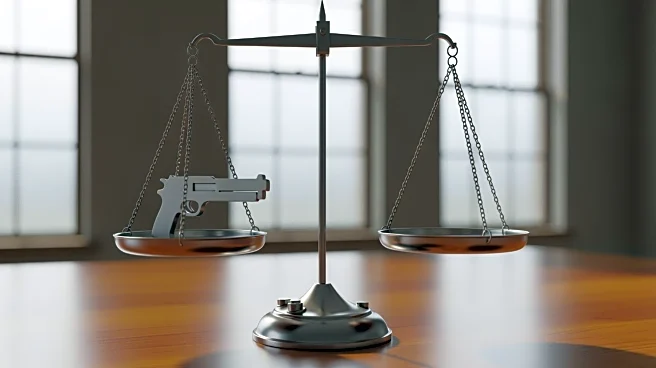
A U.S. appeals court has ruled that California's ban on openly carrying firearms in most parts of the state is unconstitutional. The decision was made by a panel of the 9th U.S. Circuit Court of Appeals,
which sided 2-1 with a gun owner, stating that the prohibition against open carry in counties with more than 200,000 people violates the Second Amendment. This ruling follows the 2022 Supreme Court decision in New York State Rifle & Pistol Association v. Bruen, which established a new legal test for firearms restrictions, requiring them to be consistent with the nation's historical tradition of firearm regulation. Judge Lawrence VanDyke, appointed by President Trump, noted that open carry is a historical practice predating the Bill of Rights. The ruling partially reverses a 2023 lower-court decision and highlights the ongoing legal challenges to modern firearm restrictions.
Why It's Important?
This ruling is significant as it challenges California's strict gun control laws, potentially impacting similar laws across the United States. The decision underscores the influence of the Supreme Court's 2022 ruling, which has prompted numerous legal challenges to firearm restrictions nationwide. For gun rights advocates, this decision represents a victory in expanding Second Amendment rights. Conversely, it poses a challenge for states like California that have implemented stringent gun control measures to address gun violence. The ruling may lead to increased legal scrutiny of other state-level gun regulations, affecting public safety policies and legislative approaches to gun control.
What's Next?
California Attorney General Rob Bonta's office is considering its options following the ruling, indicating potential further legal action or appeals. The decision may prompt other states with similar restrictions to reevaluate their laws in light of the new legal standards set by the Supreme Court. Additionally, the ruling could lead to increased advocacy and legislative efforts from both gun rights and gun control groups, as they seek to influence future legal interpretations and policy decisions. The broader implications for national gun policy remain to be seen, as this case may set a precedent for future legal challenges.