






What's Happening?
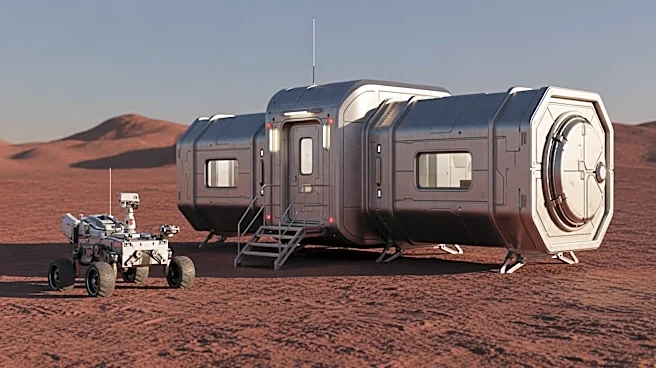
NASA's CHAPEA mission, a simulated Mars mission, has reached the 200-day mark in its 378-day duration. The mission involves a crew of four astronauts living in a confined habitat at NASA's Johnson Space Center, simulating the conditions of a Mars mission.
The crew is experiencing isolation, limited resources, and a communication blackout to mimic real Mars mission challenges. This mission aims to gather data on human performance and adaptability in extreme conditions, which is crucial for future Mars and lunar missions.
Why It's Important?
The CHAPEA mission provides critical insights into the human factors involved in long-duration space travel. Understanding how astronauts cope with isolation, resource limitations, and communication delays is essential for planning future missions to Mars and the Moon. The data collected will inform the design of habitats, mission planning, and support systems to ensure the well-being and efficiency of astronauts. This mission underscores NASA's commitment to advancing human space exploration and preparing for the challenges of deep space missions.
What's Next?
As the CHAPEA mission continues, NASA will analyze the data collected to refine strategies for future space missions. The insights gained will contribute to the development of sustainable lunar and Mars exploration programs. The mission's findings will also influence the design of support systems and infrastructure necessary for long-term human presence on other planets. NASA will continue to monitor the crew's performance and adaptability, using the results to enhance the safety and success of future missions.