
What's Happening?
Momentum for a proposed Fossil Fuel Treaty is growing, with 30 countries from the Global South, including nations in Africa, Asia, the Caribbean, Latin America, and the Pacific, actively participating
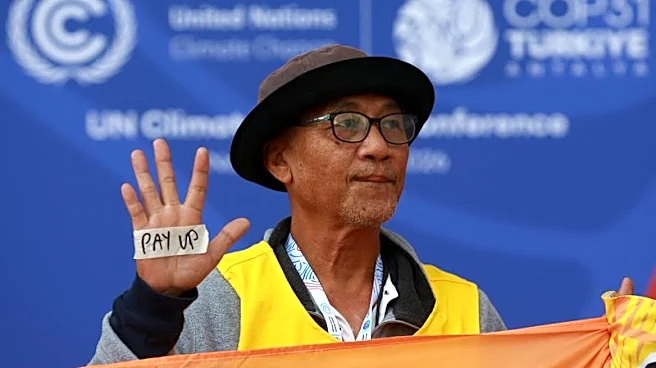
in discussions to develop this international legal instrument. This initiative aims to govern the phase-out of oil, gas, and coal. Countries like Saint Vincent and the Grenadines, Guatemala, Panama, Kenya, and Ghana have recently joined this bloc, advocating for stronger international cooperation to transition away from fossil fuels. This development occurred during COP31, where ministers from these nations emphasized the need for a framework to determine the pace, responsibility, and financial support for such a transition. Concurrently, a new draft agreement at COP31 has removed explicit references to transitioning away from fossil fuels, instead acknowledging that global warming could exceed the 1.5°C threshold and emphasizing clean energy and electrification. This omission has drawn criticism from civil society groups and vulnerable nations, who stress the urgency of a clear roadmap for phasing out fossil fuels.
Why It's Important?
The push for a Fossil Fuel Treaty by Global South nations highlights a significant divergence in climate action strategies and priorities on the international stage. These nations, often the most vulnerable to climate change impacts despite contributing the least to emissions, are seeking a legally binding framework to ensure an equitable and just transition away from fossil fuels. Their collective action underscores a growing demand for accountability from historically larger emitters and a structured approach to decarbonization, including financial support and technology transfer. The simultaneous removal of explicit fossil fuel phase-out language from the main COP31 draft agreement signals potential resistance or difficulty in achieving a consensus on this critical issue among all participating nations. This could lead to a two-tiered approach to climate action, where some nations pursue more aggressive, legally binding commitments while broader international agreements remain less prescriptive, potentially slowing global efforts to meet climate targets.
What's Next?
Discussions on the Fossil Fuel Treaty will continue to advance through the Santa Marta Process and at the 2nd Conference on the Just Transition Away from Fossil Fuels, scheduled for July 2027 in Tuvalu. These platforms will serve as crucial venues for the 30-nation bloc to refine the treaty's terms, address national and regional transition pathways, and build broader international support. At COP31, negotiations are ongoing, with the COP31 President and lead negotiators pledging to continue consultations to reach a consensus on the summit's political agreement. The final text of the COP31 cover decision will reveal the extent to which the international community agrees on concrete steps regarding fossil fuels. The ongoing debate between the Global South's push for a treaty and the broader COP negotiations' current draft language suggests that the path forward for a global fossil fuel phase-out remains contentious and will require sustained diplomatic efforts and advocacy.
Beyond the Headlines
The emergence of a strong bloc of Global South nations advocating for a Fossil Fuel Treaty signifies a potential shift in global climate governance. This initiative challenges the traditional top-down approach to climate negotiations by empowering nations most affected by climate change to drive the agenda for a just transition. It also highlights the ethical dimension of climate justice, emphasizing that those least responsible for the crisis should not bear the disproportionate burden of its impacts or the costs of transitioning away from fossil fuels. The treaty proposal implicitly critiques the perceived inadequacy of existing international agreements, like the Paris Agreement, in providing a clear, equitable, and enforceable framework for phasing out fossil fuels. This movement could lead to a re-evaluation of international climate law and the development of new legal instruments that prioritize equity, historical responsibility, and the specific needs of vulnerable nations, potentially reshaping future climate diplomacy and international cooperation.