

What's Happening?
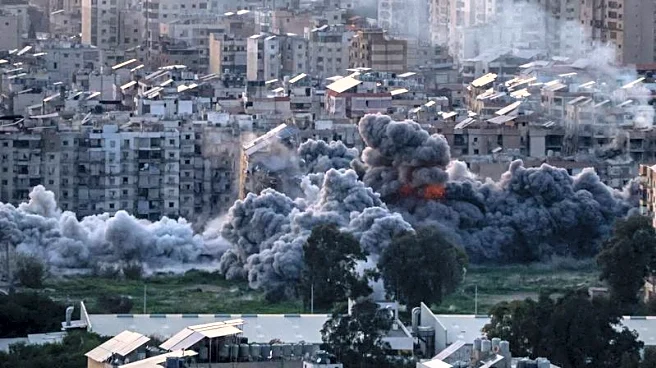
European leaders are facing a complex situation as they navigate their responses to the ongoing conflict between the U.S., Israel, and Iran. Switzerland's defense minister, Martin Pfister, has labeled the war a violation of international law, while other
European leaders, such as German Chancellor Friedrich Merz, have shown support for U.S. actions. Chancellor Merz recently met with President Trump at the White House, expressing alignment with the U.S. stance against Iran. Meanwhile, U.K. Prime Minister Keir Starmer has shifted his position, initially opposing the strikes but now reconsidering due to Iran's aggressive actions in the Gulf region. European countries hosting American military bases, like Germany, Italy, and the U.K., have generally refrained from opposing U.S. operations, prioritizing their strategic alliances. French President Emmanuel Macron, while not joining the war, has deployed France's only aircraft carrier to the region, highlighting the delicate balance European nations are trying to maintain.
Why It's Important?
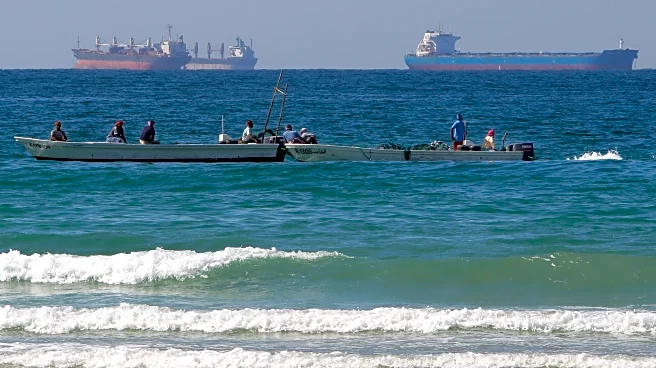
The European response to the U.S. and Israeli conflict with Iran is significant as it underscores the geopolitical complexities and alliances at play. European countries are caught between supporting their American allies and adhering to international law principles. The conflict has implications for European security, particularly with Iran's missile and drone attacks on countries in the Gulf region. The situation also affects Europe's energy security, as the Eastern Mediterranean is crucial for shipping and energy supplies. The conflict could lead to increased refugee flows and heightened terrorism risks in Europe. Additionally, the war in Ukraine has already strained Europe's relations with Russia and China, complicating their security landscape. The evolving dynamics in the Middle East further challenge Europe's ability to maintain stability and protect its interests.
What's Next?
European leaders will likely continue to assess their positions and strategies in response to the conflict. The deployment of military assets to the Eastern Mediterranean by countries like France, Greece, and the U.K. indicates a focus on protecting European territories and interests. The situation may prompt further diplomatic engagements with the U.S. and Israel to address security concerns and seek resolutions. European nations may also explore strengthening their defense capabilities and alliances to mitigate potential threats. The ongoing conflict could influence future European foreign policy decisions, particularly regarding their relationships with the U.S., Russia, and China.
Beyond the Headlines
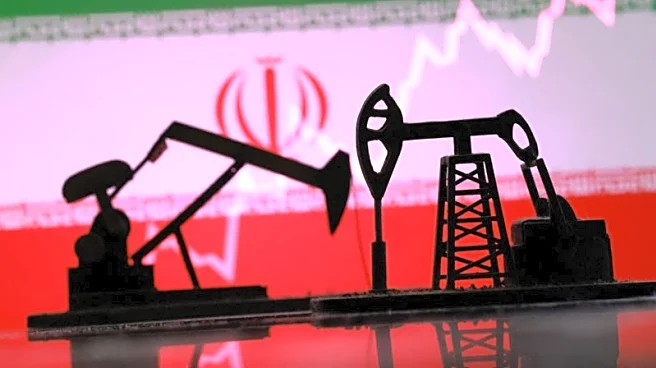
The conflict highlights the ethical and legal dilemmas faced by European leaders as they balance international law with strategic alliances. The situation raises questions about the effectiveness of international institutions in addressing such conflicts and the role of European countries in global security. The war's impact on energy prices and supply chains could have long-term economic consequences for Europe. Additionally, the conflict may prompt a reevaluation of Europe's defense strategies and its reliance on U.S. military support. The evolving geopolitical landscape could lead to shifts in European foreign policy and security priorities.