






What's Happening?
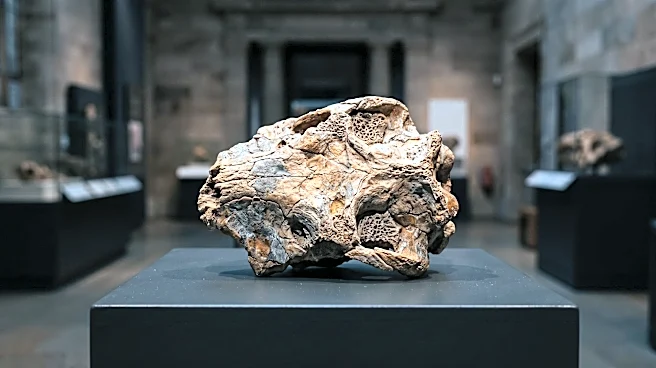
Chinese researchers from the Institute of Vertebrate Paleontology and Paleoanthropology (IVPP) of the Chinese Academy of Sciences have successfully identified the shared morphological features of Denisovans, an extinct branch of ancient hominins. This
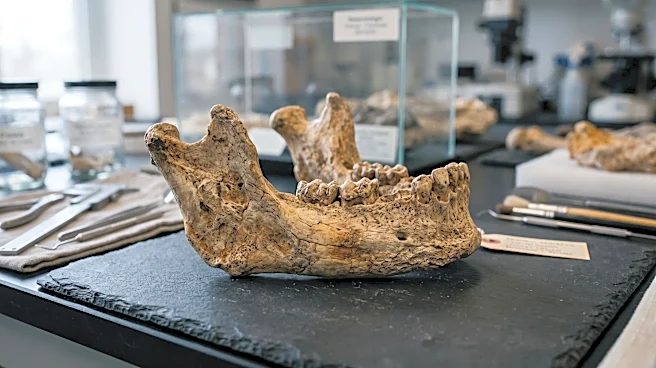
breakthrough, published in the journal Nature, was achieved by analyzing ancient protein evidence from Xujiayao hominin fossils found in Yangyuan county, Hebei province, China. The Xujiayao site, dating back 199,000 to 138,000 years, provided the crucial lead. The research team extracted endogenous proteins from small amounts of bone powder from damaged surfaces of these fossils. Paleoproteomic analyses confirmed that these Xujiayao hominins were indeed Denisovans. Based on this confirmation, the researchers systematically summarized the typical morphological characteristics of Denisovans, focusing on their cranium, mandible, and teeth. This study addresses the long-standing challenge in paleoanthropology of identifying Denisovans morphologically, as they were previously known primarily through DNA evidence from a Siberian cave discovery in 2010.
Why It's Important?
This research significantly advances the understanding of human evolution, particularly regarding the Denisovan lineage. Prior to this study, the scarcity of fossil records made it difficult for the academic community to establish the shared morphological features of Denisovans, an ancient hominin group known to have interbred with modern humans. The ability to morphologically characterize Denisovans allows for better classification and comparison with other ancient hominins. This could lead to a re-evaluation of other unidentified hominin fossils in East Asia, potentially expanding the known geographical distribution of Denisovans across the continent. The findings provide a clearer picture of the evolutionary landscape of ancient hominins, revealing that Denisovans possessed a mix of primitive traits, similar to Homo erectus (e.g., low braincase, thick cranial bones), and advanced features, akin to later Homo members (e.g., simplified premolar occlusal surfaces). This blend of characteristics offers new insights into the evolutionary pathways and adaptations of early human ancestors.
What's Next?
The successful morphological identification of Denisovans opens new avenues for future paleoanthropological research. Researchers can now use these newly defined morphological criteria to re-examine other ancient hominin fossils, particularly those found in East Asia whose taxonomic status remains unclear. This could lead to the reclassification of existing fossil discoveries and the identification of more Denisovan remains, thereby expanding their known distribution and providing a more comprehensive understanding of their presence across the continent. Further studies will likely focus on comparing these morphological features with those of other hominin groups to refine the evolutionary tree. The methodology of using paleoproteomic analyses on damaged fossils also sets a precedent for analyzing other challenging fossil records, potentially unlocking more secrets about ancient human populations and their interactions. This could lead to a more detailed understanding of interbreeding events between Denisovans and modern humans, and their impact on human genetic diversity.
Beyond the Headlines
The ability to morphologically identify Denisovans has profound implications beyond mere classification. It transforms Denisovans from a largely genetic entity into a physically recognizable ancient human group, making them 'knowable, comparable, and classifiable' in a tangible sense. This shift could influence how we perceive the diversity of ancient human populations and their contributions to the modern human gene pool. The study highlights the power of interdisciplinary approaches, combining paleoproteomics with traditional morphological analysis, to solve long-standing mysteries in human evolution. Ethically, this research underscores the importance of preserving and meticulously studying fossil records, even fragmented ones, as they hold invaluable genetic and protein information. Culturally, it enriches the narrative of human origins, emphasizing the complex and interconnected history of various hominin groups across different continents, challenging simpler linear models of human evolution and highlighting the rich tapestry of our ancient past.