



What's Happening?
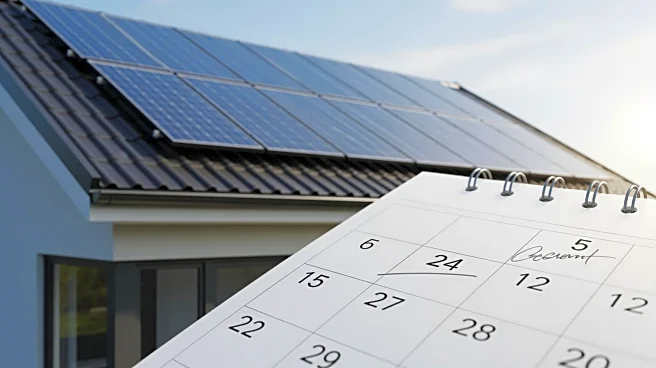
The Trump administration's budget bill, passed by Congress in July, has accelerated the expiration date for two significant tax credits aimed at supporting energy-efficient home upgrades. These credits, the residential clean energy credit and the energy-efficient home improvement
credit, are set to expire on December 31, 2025. Homeowners have until the end of the year to complete installations to qualify for these credits. The residential clean energy credit allows homeowners to claim 30% of the cost of new, qualified clean energy property, including solar electric panels, solar water heaters, wind turbines, geothermal heat pumps, fuel cells, and battery storage technology. The energy-efficient home improvement credit offers up to $3,200 for various upgrades, such as heat pumps and energy-efficient doors and windows.
Why It's Important?
The expiration of these tax credits could significantly impact homeowners looking to invest in energy-efficient upgrades. These credits have been instrumental in making such investments more affordable, thereby promoting the adoption of renewable energy technologies. The accelerated expiration may lead to a rush among homeowners to complete installations before the deadline, potentially boosting short-term demand for solar and other renewable technologies. However, the long-term effect could be a slowdown in the adoption of these technologies, as the financial incentives diminish. This change aligns with the Trump administration's broader policy stance, which has been less supportive of renewable energy compared to previous administrations.
What's Next?
As the deadline approaches, homeowners and contractors are likely to expedite projects to ensure eligibility for the credits. The renewable energy industry may lobby for an extension or renewal of these credits, arguing their importance in promoting clean energy adoption. The outcome of these efforts could influence future policy decisions and the pace of renewable energy adoption in the U.S.