




What's Happening?
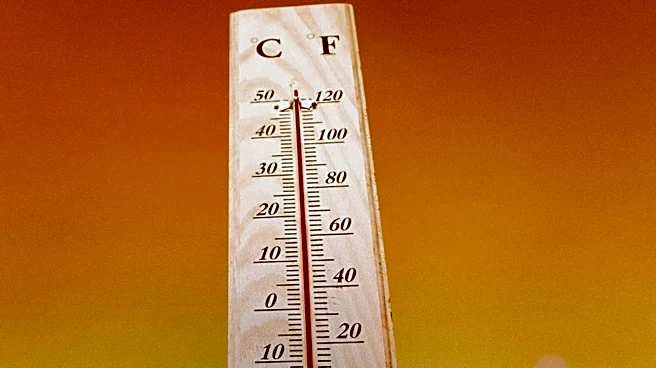
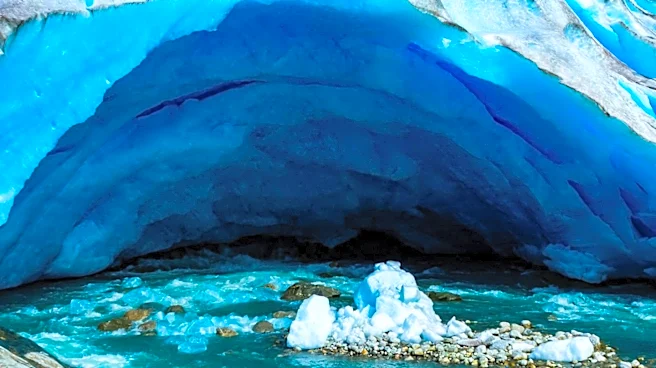
Slovenia's Mount Triglav has lost its last remaining traces of ice due to intense summer temperatures across Europe. Researchers had anticipated the glacier's disappearance decades ago, with a significant portion vanishing between the early 1980s and
early 2000s. Despite expectations, the frozen expanse persisted for another two decades. However, recent photographs confirm the mountain is now entirely bare, with the final sliver of ice disappearing by the end of August. Matija Zorn, director of the Anton Melik Geographical Institute, who has monitored the site for years, expressed shock at the rapid melting, noting the peak's central role in Slovenian national identity and its value as a research tool. This event is part of a broader trend, as severe heatwaves have transformed large areas of the Alps into barren landscapes, with Switzerland reportedly losing nearly 20% of its frozen reserves recently.
Why It's Important?
The complete disappearance of ice from Mount Triglav carries significant cultural and ecological implications. For Slovenia, the mountain is a national symbol, prominently featured on its flag, and climbing it is considered a rite of passage. Its loss represents a profound blow to national identity and cultural heritage. Ecologically, the rapid melting of glaciers across the Alps, including Mount Triglav, signals an accelerated impact of climate change on sensitive ecosystems. Glaciers are vital freshwater sources and indicators of global warming. Their rapid retreat affects water availability, local biodiversity, and contributes to rising sea levels. The event underscores the urgent need for global action on climate change, as natural wonders once thought eternal are now visibly succumbing to changing weather patterns, impacting both the environment and human societies that depend on them.
What's Next?
The continued monitoring of alpine regions will likely reveal further glacier retreat and ecological shifts as global temperatures rise. Experts anticipate that similar losses will occur across other European mountain ranges, potentially impacting water resources and tourism in the long term. The visible impact on iconic landmarks like Mount Triglav may intensify public and political pressure for more aggressive climate policies and adaptation strategies. Local communities and governments in affected regions will need to consider how to adapt to these environmental changes, including managing water supplies and preserving cultural heritage in the face of altered landscapes. The event serves as a stark reminder of the ongoing and accelerating effects of climate change, prompting discussions on future environmental resilience and sustainability efforts.
Beyond the Headlines
The loss of Mount Triglav's ice highlights a deeper societal challenge: the struggle to reconcile human activity with environmental preservation. Miha Pavšek, a local mountain guide, noted that 'nature is changing in front of our eyes' while society often ignores the threat, expressing a personal sense of loss. This sentiment reflects a broader psychological and cultural impact of climate change, where familiar landscapes and symbols of permanence are eroding. The event could trigger a re-evaluation of national identities tied to natural features and foster a greater sense of urgency regarding environmental stewardship. It also raises ethical questions about intergenerational responsibility and the legacy of environmental degradation, pushing for a more profound societal shift towards sustainable practices and a recognition of the intrinsic value of natural ecosystems.