
What's Happening?
A meteorologist has raised concerns about the impact of limited and scattered rainfall in Argentina's Pampas region on the country's 2025/26 corn crop. German Heinzenknecht, a specialist at the Applied
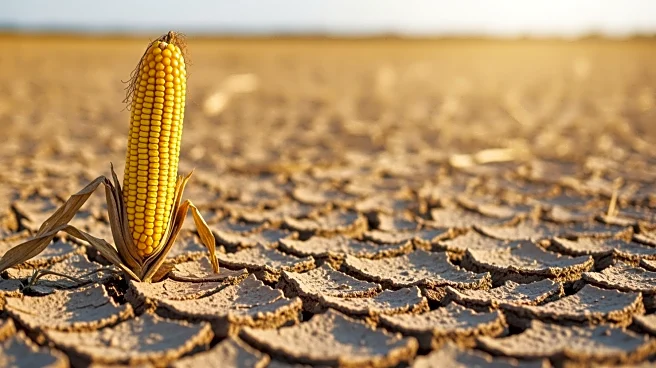
Climatology Consulting firm, noted that since December, there has been little rainfall in the core agricultural region and Buenos Aires province. This lack of precipitation is particularly concerning during the December-February period, which is the warmest and most moisture-demanding time in Argentina. The Buenos Aires Grains Exchange reported that the region is expected to receive only 10 to 25 mm of rainfall over the next week. The Rosario Grains Exchange, which forecasts a record corn harvest of 62 million tons, also highlighted the adverse weather conditions affecting important corn-growing areas. The limited rainfall is expected to negatively impact early-planted corn, which is currently flowering, potentially reducing its yield potential.
Why It's Important?
The dry conditions in Argentina's key agricultural regions could have significant implications for global corn markets, as Argentina is the world's third-largest corn exporter. A reduction in corn yield could lead to increased prices and affect global supply chains. The situation also poses a risk to soybean crops, with the Buenos Aires Grains Exchange reporting that soybean crops are at risk due to the limited forecast rainfall. This could further impact global agricultural markets, as Argentina is a major player in soybean production. The potential decrease in crop yields could affect farmers' incomes and the country's agricultural economy, which relies heavily on exports.
What's Next?
If the dry conditions persist, Argentina may face challenges in meeting its projected record corn harvest. The agricultural sector will be closely monitoring weather patterns and hoping for increased rainfall to mitigate the potential impact on crop yields. Farmers may need to adjust their strategies, possibly considering irrigation or other measures to conserve moisture. The global agricultural market will also be watching closely, as any significant changes in Argentina's output could influence international prices and trade dynamics.