



What's Happening?
GomSpace has announced it secured an 8 MEUR (approximately 89.1 MSEK) contract for the second phase of a lunar mission program with a leading North American space company. This contract, announced on November 19, 2026, follows an initial phase contract from
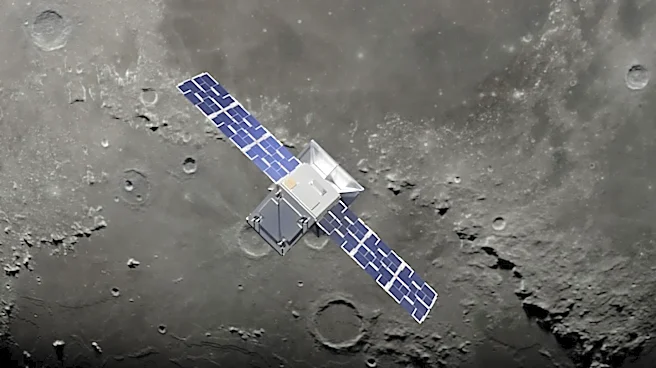
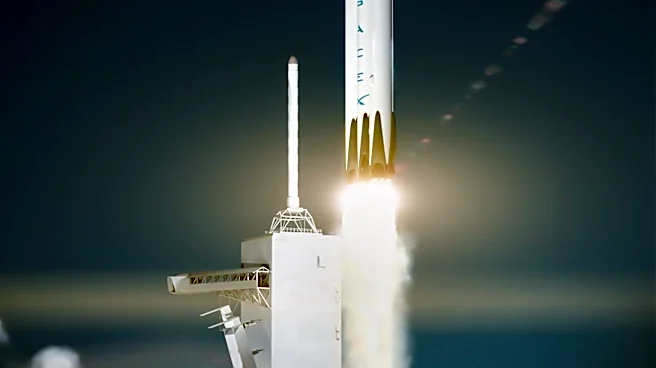
January 9, 2026. The mission involves deploying two satellites into lunar orbit to conduct resource prospecting, which is crucial for future lunar exploration efforts. This second phase aims to advance the mission towards full operational capability around the Moon, culminating in end-of-mission operations. GomSpace will leverage its experience from previous deep-space missions, such as ESA's Hera mission and the Juventas CubeSat, to develop high-reliability systems for this complex endeavor. Key upcoming milestones include the Critical Design Review, satellite payload integration in the United States, and launch activities, also to be conducted in the United States.
Why It's Important?
This contract signifies a substantial step forward in lunar exploration and resource utilization, with direct implications for U.S. space initiatives. By supporting a leading North American space company, GomSpace's involvement contributes to the broader goal of establishing a sustainable human presence on the Moon. The resource prospecting aspect of the mission is particularly vital, as identifying and assessing lunar resources like water ice could significantly reduce the cost and complexity of future long-duration missions and potential lunar bases. This collaboration also reinforces the international nature of space exploration, with European companies like GomSpace playing a critical role in U.S.-led efforts. The development of high-reliability systems for deep space missions further advances technological capabilities within the space industry, benefiting both commercial and governmental space programs.
What's Next?
The immediate next steps for this lunar mission include the Critical Design Review, which will finalize the technical specifications and design of the satellites. Following this, satellite payload integration will occur in the United States, a crucial phase where scientific instruments and other components are assembled onto the spacecraft. Launch activities are also scheduled to take place in the United States, with the delivery of the mission components slated for late 2027. This timeline indicates a steady progression towards the mission's operational phase in lunar orbit. Successful deployment and operation of these satellites will pave the way for more detailed resource mapping and potentially influence future lunar landing sites and infrastructure development plans by the North American space company involved.
Beyond the Headlines
This contract underscores a growing trend in space exploration: the increasing reliance on commercial partnerships and specialized expertise from international entities to achieve ambitious goals. GomSpace's role highlights the global supply chain that underpins modern space missions, where companies contribute specific technological capabilities. Beyond the immediate mission objectives, the success of resource prospecting could fundamentally alter the economics of space exploration, potentially enabling in-situ resource utilization (ISRU) that reduces the need to transport all supplies from Earth. This could lead to a more sustainable and cost-effective approach to lunar and even Martian exploration, fostering a new era of space industrialization and permanent off-world outposts. The mission also reinforces the strategic importance of the Moon as a proving ground for technologies and operational procedures essential for deeper space endeavors.