




What's Happening?
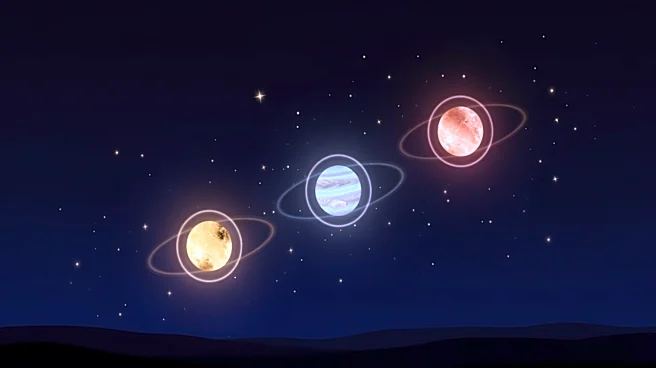
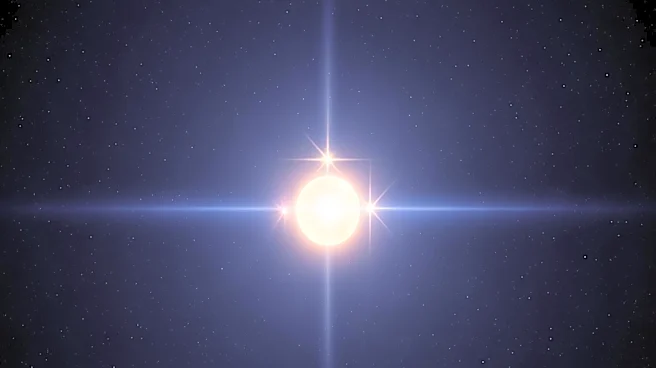
In May, skywatchers will have the opportunity to observe a celestial event featuring Venus, Jupiter, and Mercury. Venus, known for its brightness, will be visible in the west-northwest sky during evening twilight, shining at a magnitude of -4.0. On May 18,
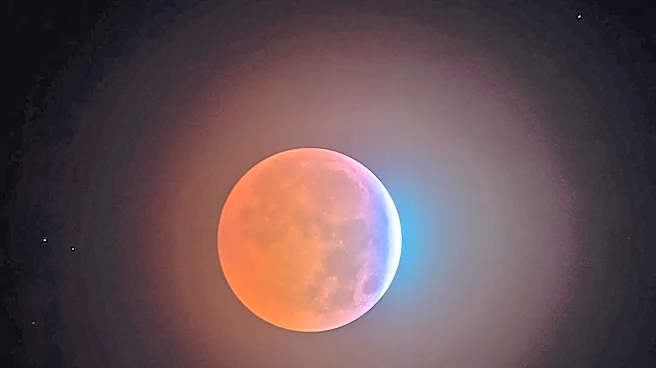
a crescent moon will appear close to Venus, enhancing the visual spectacle. Jupiter, positioned one-third up from the western horizon, will be visible until midnight, offering a chance to view its cloud patterns and satellites through telescopes. Mercury will become increasingly visible towards the end of May, appearing as a bright 'star' above the western horizon. This event provides a unique opportunity for both amateur and seasoned astronomers to observe these planets in close proximity.
Why It's Important?
This celestial event is significant for astronomy enthusiasts and the general public, offering a rare chance to observe multiple planets in the night sky. Such events can inspire interest in astronomy and science, encouraging educational activities and public engagement. The visibility of these planets, especially with the aid of telescopes, allows for detailed observation of their features, contributing to amateur astronomical research. Additionally, these events can foster community gatherings and educational programs, promoting a broader understanding of our solar system.
What's Next?
As the month progresses, observers can expect Mercury to become more prominent in the evening sky, reaching its peak visibility in June. This gradual change will allow for continued observation and study of the planet's movement and characteristics. The alignment of these planets may also lead to further astronomical events, providing ongoing opportunities for observation and research. Educational institutions and astronomy clubs may organize events and workshops to maximize public engagement and learning.