



What's Happening?
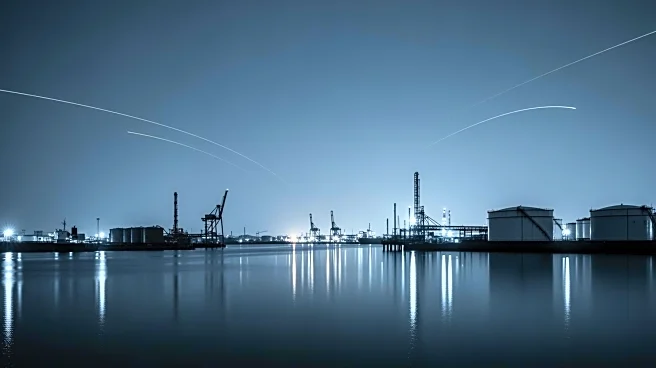
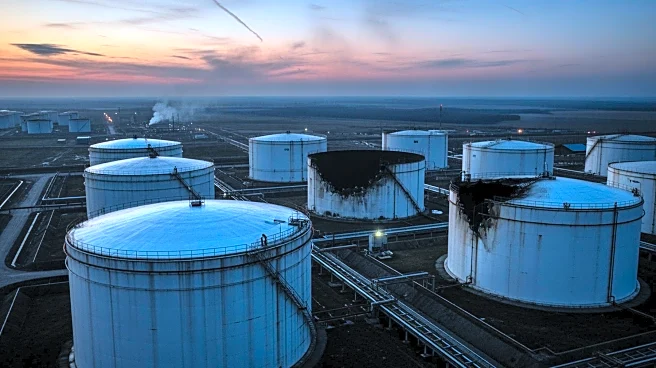
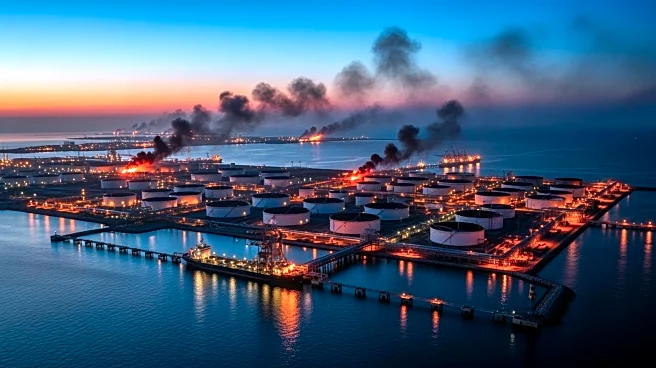
Ukrainian drone strikes have targeted Russian oil export infrastructure in the Baltic Sea region, causing significant fires and halting tanker loading operations. The attacks, which have occurred over several nights, have severely impacted the Ust-Luga
and Primorsk ports, responsible for about 40% of Russia's fuel exports by sea. Satellite imagery shows extensive fires at these facilities, with flames reaching up to 100 meters high. The strikes are part of Ukraine's strategy to degrade Russian energy export capabilities, with Ukrainian military forces taking credit for the operations.
Why It's Important?
The drone strikes represent a significant escalation in the conflict between Ukraine and Russia, directly targeting critical infrastructure and impacting Russia's economy. By disrupting oil exports, Ukraine aims to weaken Russia's financial resources, which are crucial for funding its military operations. The attacks highlight the increasing use of drone technology in modern warfare, showcasing its potential to inflict substantial economic damage. The situation also raises concerns about the security of energy infrastructure and the broader implications for global energy markets.
What's Next?
The ongoing conflict is likely to see further military engagements, with potential retaliatory actions from Russia. The disruption of oil exports could lead to increased volatility in global energy markets, affecting prices and supply chains. International stakeholders, including governments and energy companies, will be closely monitoring the situation, as prolonged disruptions could have far-reaching economic consequences. Diplomatic efforts may intensify to de-escalate the conflict and address the underlying issues driving the hostilities.