
What's Happening?
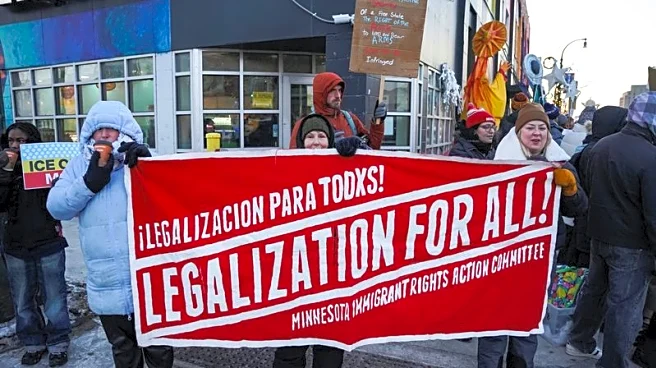
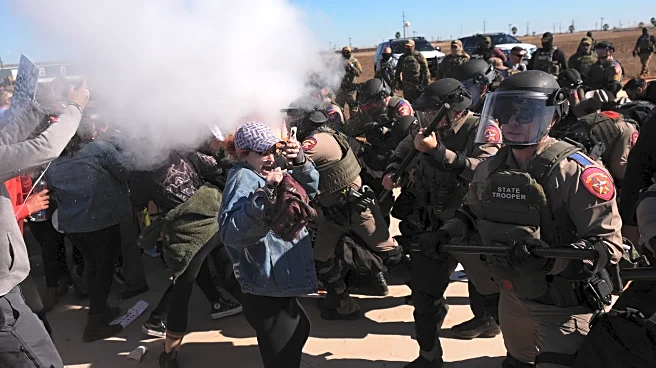
For the second consecutive week, thousands of protesters have gathered in Minneapolis and other U.S. cities to demonstrate against the presence of Immigration and Customs Enforcement (ICE) agents. The
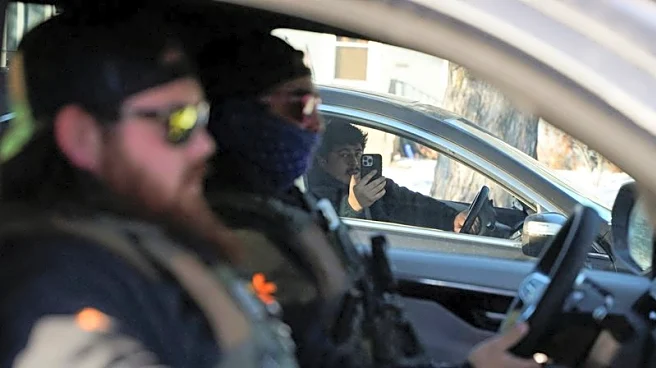
protests are part of a broader movement calling for an end to Operation Metro Surge, which has increased ICE and U.S. Border Patrol presence in Minnesota. The demonstrations were sparked by the Department of Justice's civil rights investigation into the shooting of Alex Pretti, a Minneapolis resident, but not the case of Renee Macklin Good, who was killed by an ICE agent. Protesters are demanding accountability and reform in immigration enforcement practices.
Why It's Important?
The ongoing protests reflect widespread public dissatisfaction with ICE's operations and the broader immigration enforcement policies in the United States. The civil rights investigation into Alex Pretti's shooting highlights concerns about the use of force by immigration agents and potential violations of civil rights. The exclusion of Renee Macklin Good's case from the investigation has intensified public outrage, raising questions about transparency and accountability within ICE. These protests could influence public policy and political discourse around immigration enforcement, potentially leading to calls for reform and increased oversight.
What's Next?
As protests continue, there may be increased pressure on lawmakers and government officials to address the concerns raised by demonstrators. The outcome of the Department of Justice's civil rights investigation could impact future ICE operations and policies. Additionally, the protests could lead to further scrutiny of ICE's practices and potentially spark legislative efforts to reform immigration enforcement in the U.S.