






What's Happening?
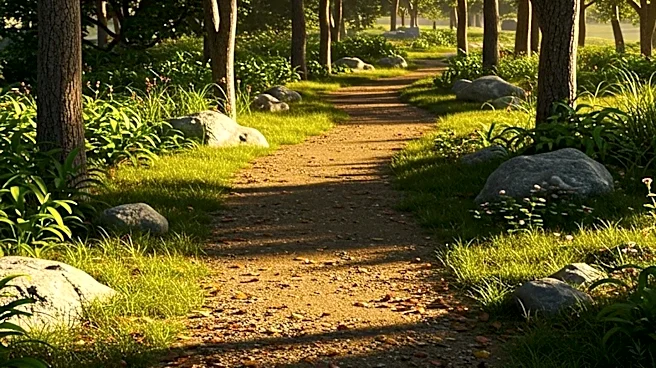
The town of Lincoln is exploring the possibility of creating natural burial grounds on town-owned land, specifically behind the town garage. This initiative is being led by Christine Birong-Smith of the Lincoln Conservation Commission, who aims for Lincoln to be the first
municipality in Vermont to establish an all-green cemetery. The concept of natural burial involves interring bodies without embalming chemicals or non-biodegradable coffins, allowing them to decompose naturally and contribute to the soil. The effort is in response to a growing desire among residents for environmentally friendly burial options, as exemplified by Jean Arrowsmith, a Lincoln resident who chose a natural burial in a neighboring town due to the lack of such facilities in Lincoln. A public information session on the idea recently attracted about 50 attendees, indicating community interest.
Why It's Important?
This consideration is significant as it reflects a growing national trend towards sustainable end-of-life practices and environmental consciousness. By potentially establishing natural burial grounds, Lincoln would offer its residents an option that aligns with ecological values, reducing the environmental impact associated with traditional burials. This move could also set a precedent for other municipalities in Vermont and beyond, encouraging a broader adoption of green burial practices. It addresses a specific community need, providing a local alternative for those who wish to return to nature in their final resting place. Furthermore, it highlights the evolving role of local governments in responding to citizen demands for more environmentally responsible services and land use.
What's Next?
The Lincoln Conservation Commission is currently in the initial stages of this project, with no budget or concrete proposal yet finalized. The process will involve addressing permitting challenges, fundraising efforts, and conducting further community meetings to gather input and support. A town-wide vote will likely be required at some point to determine if Lincoln taxpayers are willing to support the plan. Michelle Hogle Acciavatti, who helped pass Vermont's green burial law and established the state's first natural forest burial site, has identified potential locations on the town land, noting that road and parking access would be the main challenges. The commission plans to proceed one step at a time, with the hope that Lincoln's pioneering efforts will inspire other towns.
Beyond the Headlines
The movement towards natural burial grounds in Lincoln touches upon deeper societal shifts regarding death, environmental stewardship, and community values. It challenges conventional funeral practices, which often involve significant ecological footprints, by offering a more harmonious integration with natural cycles. This initiative also underscores the importance of local land use planning in accommodating diverse community needs and preferences, including those related to end-of-life choices. Ethically, it reflects a desire to extend environmental principles to all stages of life, including death. Culturally, it represents a re-evaluation of how communities honor their deceased, moving towards practices that emphasize ecological connection and simplicity. The success of this project could foster a greater appreciation for natural landscapes and their multi-faceted roles within a community.