





What's Happening?
Michal Sklar, a 32-year-old social media marketer, developed the unusual ability to speak, read, and write words backwards after suffering an unexplained grand mal seizure in October 2010, just before her 17th birthday. Initially a frightening experience,
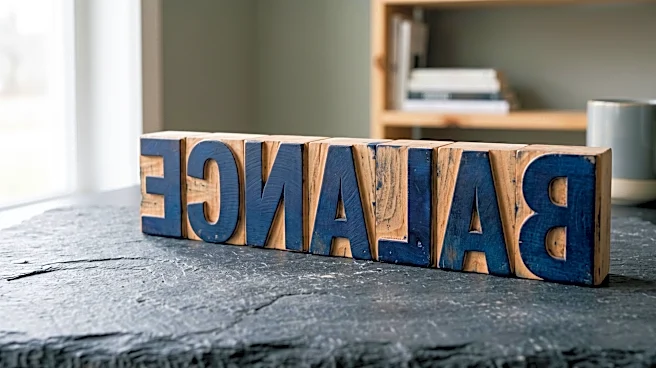
Sklar gradually gained control over this unique neurological phenomenon. She can automatically reverse familiar words up to about four syllables, with the backwards version simply appearing in her mind. For longer words, she needs to consciously break them apart. When reversing sentences, she flips each word individually while maintaining the original word order. Her demonstrations of this ability on TikTok have garnered significant attention, with one video reaching over 4.1 million views.
Why It's Important?
Sklar's case is important as it highlights the brain's remarkable capacity for adaptation and the mysterious ways neurological events can alter cognitive functions. Her unique ability has attracted the interest of researchers, including Dr. Dianne Newbury of Oxford Brookes University and Dr. Hayley Moutford, who conducted studies on backwards speakers in 2017 and 2018. Such research can provide valuable insights into language processing, brain plasticity, and the mechanisms underlying neurological conditions like seizures. From a broader perspective, her story brings attention to less common neurological phenomena and encourages a deeper understanding of the human brain's complexities. It also underscores the power of social media in sharing unique personal experiences and connecting individuals with similar conditions or research interests.
What's Next?
Sklar continues to share her experiences on social media, potentially inspiring others with unique neurological conditions and fostering a sense of community. The research initiated by Dr. Newbury and Dr. Moutford may lead to further studies on backwards speech and other unusual cognitive abilities, potentially uncovering new information about brain function and recovery post-trauma. Sklar expresses a desire to meet other backwards speakers involved in the study, suggesting future gatherings or collaborations that could further explore this phenomenon. Her story could also pave the way for increased public awareness and acceptance of diverse neurological conditions, encouraging more open dialogue and support for individuals with unique cognitive profiles.
Beyond the Headlines
Beyond the scientific and social media aspects, Sklar's story delves into the psychological impact of living with an extraordinary ability. What began as a frightening and uncontrollable experience transformed into a 'useless superpower' that she has integrated into her life. This journey highlights themes of adaptation, resilience, and self-acceptance in the face of unexpected life changes. The public's fascination with her ability also touches on our collective curiosity about the limits of human cognition and the brain's hidden potentials. It raises questions about how we define 'normal' and how individuals navigate identities shaped by unique neurological traits. Her experience also subtly critiques societal expectations, as some critics have deemed her talent 'less cool' due to its specific mechanics, prompting her to assert that she didn't choose how her brain processes information.