





What's Happening?
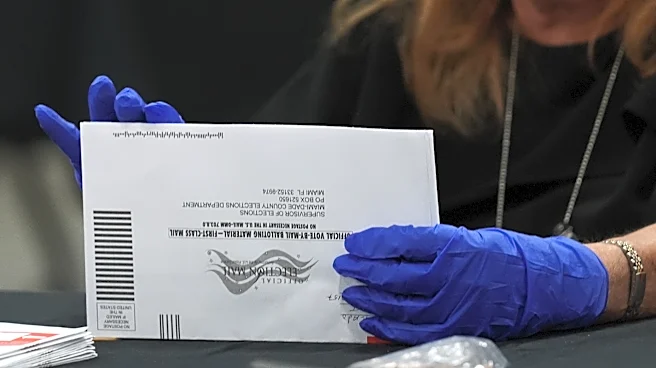
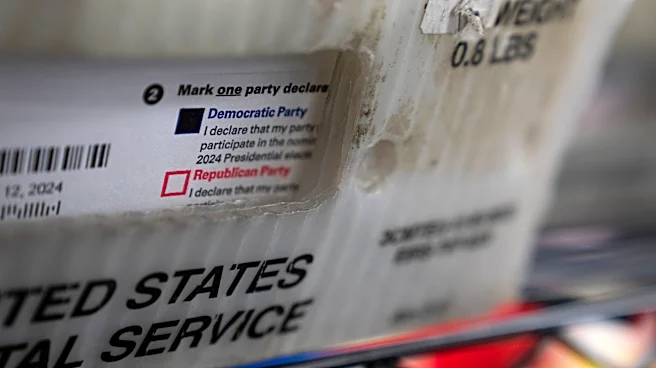
Arizona voters will decide on Proposition 144, a ballot measure that would mandate all voters to present valid government-issued identification to cast a ballot, including for mail-in voting. The proposition also stipulates that ballots must be tabulated
at the voter's location on Election Day and reaffirms that only U.S. citizens can register and vote in Arizona elections. If approved, this measure would take effect for elections held on or after January 1, 2028. Supporters, including the Arizona Secretary of State GOP candidate Alex Kolodin and Heritage Action for America, argue that Proposition 144 will safeguard Arizona's elections and ensure vote integrity. Conversely, opponents such as the ACLU of Arizona and the League of Women Voters of Arizona contend that the ID requirement would complicate mail-in voting and create barriers, potentially disenfranchising some voters. This initiative is one of eight statewide ballot proposals Arizona voters will consider.
Why It's Important?
The outcome of Proposition 144 in Arizona carries significant implications for voter access and election security debates across the U.S. If passed, it would represent a tightening of voting requirements in a key swing state, potentially influencing similar legislative efforts nationwide. Proponents believe such measures are crucial for maintaining public trust in election results by preventing fraud and ensuring only eligible citizens vote. However, critics argue that strict voter ID laws disproportionately affect minority groups, low-income individuals, and the elderly who may face challenges in obtaining required identification, thereby suppressing voter turnout. The debate highlights a national tension between ensuring election integrity and protecting voting rights, with Arizona serving as a battleground for these competing priorities. The implementation of such a law could set a precedent for other states considering similar restrictions, impacting the broader landscape of U.S. electoral policy.
What's Next?
Leading up to the November election, public discourse and campaigning around Proposition 144 are expected to intensify. Both proponents and opponents will likely launch extensive public awareness campaigns to sway voters. Organizations like the ACLU of Arizona and the League of Women Voters of Arizona will continue to highlight potential disenfranchisement, while groups such as Heritage Action for America will emphasize election security. Should the proposition pass, legal challenges are highly probable, as similar voter ID laws have often faced scrutiny in courts regarding their constitutionality and impact on voting rights. The implementation date of January 1, 2028, provides a window for these potential legal battles to unfold. Regardless of the outcome, the debate surrounding Proposition 144 will likely fuel ongoing national discussions about voter identification, mail-in voting, and the balance between election security and accessibility.
Beyond the Headlines
The debate over Proposition 144 extends beyond immediate electoral mechanics, touching upon fundamental questions of democratic participation and trust. The push for stricter voter ID laws often reflects a broader concern about the legitimacy of election outcomes, a sentiment that has been amplified in recent years. While proponents frame these measures as essential for preventing fraud, opponents view them as a strategic effort to suppress votes from demographics that tend to lean against the parties advocating for such laws. This proposition also highlights the evolving role of state-level ballot initiatives in shaping national policy trends, as Arizona's decision could embolden or deter similar efforts in other states. The long-term implications could include a further polarization of voting access, with some states making it easier to vote and others more difficult, potentially leading to a fragmented national electoral system and continued legal and political contention over the very definition of a 'free and fair' election.