



What's Happening?
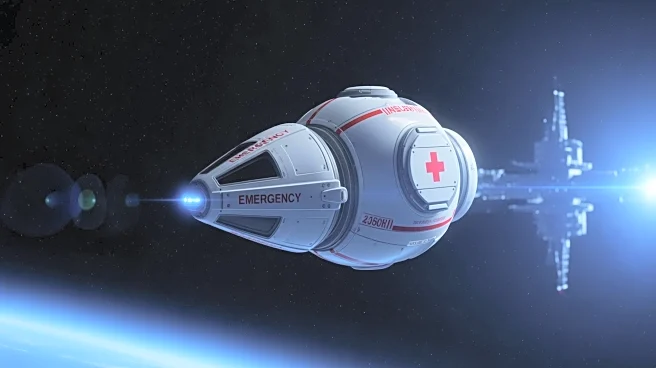
NASA recently conducted its first-ever medical evacuation from the International Space Station (ISS), cutting short the Crew-11 mission by a month due to a serious health concern. The crew, consisting of astronauts Zena Cardman, Mike Fincke, Japanese
astronaut Kimiya Yui, and Russian cosmonaut Oleg Platonov, returned to Earth on January 14, landing off the coast of San Diego. The specifics of the medical issue remain undisclosed, but the incident has raised questions about the preparedness of space missions for medical emergencies. The use of ultrasound technology during the evacuation was noted as particularly beneficial, suggesting the potential for more advanced onboard medical capabilities in future missions.
Why It's Important?
This evacuation underscores the critical need for improved medical self-sufficiency in space missions, especially as missions become longer and more distant from Earth. The incident serves as a wake-up call for NASA and other space agencies to prioritize health resilience over peak fitness in astronaut selection processes. The potential for AI-assisted diagnostics and expanded pharmaceutical inventories on spacecraft could become essential as missions extend to the Moon, Mars, and beyond. The event highlights the vulnerability of human bodies in space, where conditions like microgravity and radiation can exacerbate health risks.
What's Next?
NASA and its partners, including the European Space Agency and private companies like SpaceX, are likely to intensify efforts to develop protocols that ensure astronaut health during long-duration missions. This may involve more rigorous health screenings and the integration of advanced medical technologies on spacecraft. The incident may also prompt a reevaluation of mission planning to include contingencies for medical emergencies, particularly for missions to the Moon and Mars, where immediate return to Earth is not feasible.
Beyond the Headlines
The evacuation highlights broader implications for the future of human space exploration. As missions venture further from Earth, the ability to manage health issues autonomously becomes crucial. This could lead to significant advancements in space medicine and technology, potentially benefiting healthcare on Earth as well. The incident also raises ethical considerations about the risks astronauts face and the measures needed to mitigate them.