




What's Happening?
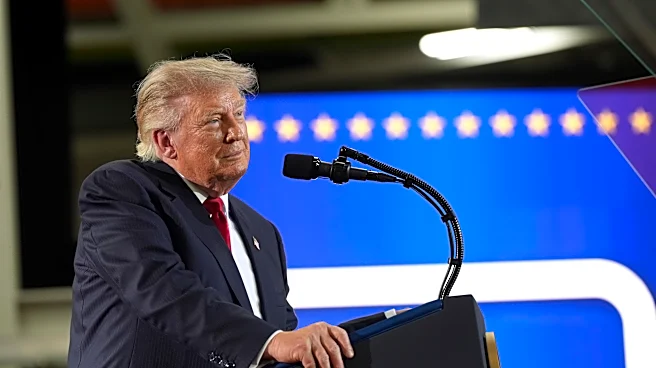
Senate Majority Leader John Thune has declined President Trump's request to eliminate the Senate filibuster and cancel the upcoming recess to pass the SAVE America Act. The bill, which requires proof of citizenship and voter ID for federal elections,
has failed to secure the necessary 60-vote supermajority in the Senate. Thune, a co-sponsor of the bill, expressed skepticism about its passage without sufficient votes and questioned the practicality of remaining in session without a clear path to success. Despite Trump's pressure, Thune emphasized that the legislative filibuster would not be removed, and the Senate has already voted on the bill multiple times without success.
Why It's Important?
The refusal to eliminate the filibuster and cancel the recess highlights the ongoing tension between President Trump and Senate Republicans. The SAVE America Act, if passed, would significantly alter voting requirements, potentially affecting millions of Americans. Thune's stance underscores the challenges of passing controversial legislation in a divided Senate. The decision not to pursue Trump's demands reflects the broader political dynamics and the difficulty of achieving consensus on voting rights legislation. The outcome of this legislative battle could have significant implications for future elections and the balance of power in Congress.
What's Next?
As the Senate approaches its scheduled recess, the future of the SAVE America Act remains uncertain. Without a clear path to passage, the bill may continue to stall in the Senate. President Trump may continue to apply pressure on Republican leaders to find a way forward, but the lack of support for eliminating the filibuster suggests that significant changes to Senate procedures are unlikely. The ongoing debate over voting rights and election security is expected to remain a contentious issue in U.S. politics, with potential implications for upcoming elections and legislative priorities.