
What's Happening?
Members of Congress are calling for an investigation into the Department of Justice (DoJ) after discovering that the department has been tracking their research activities related to Jeffrey Epstein files.
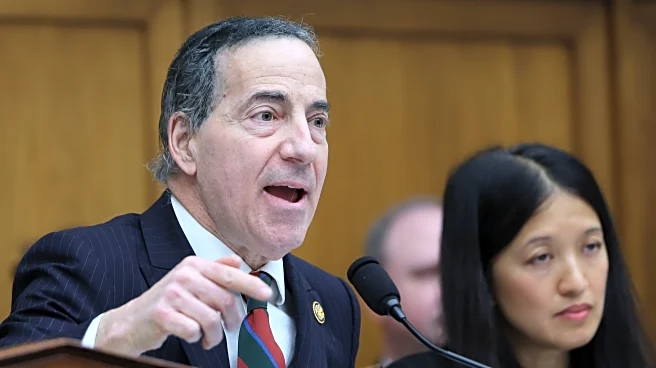
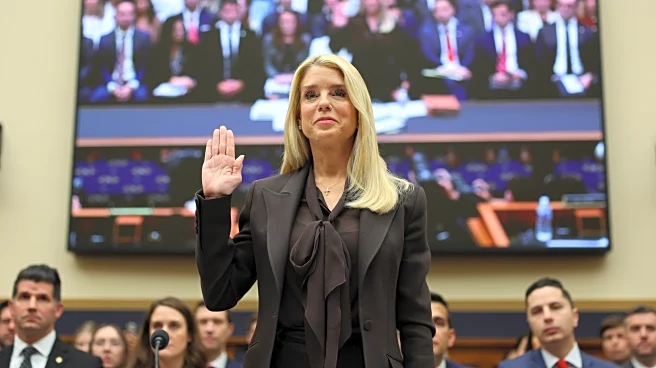
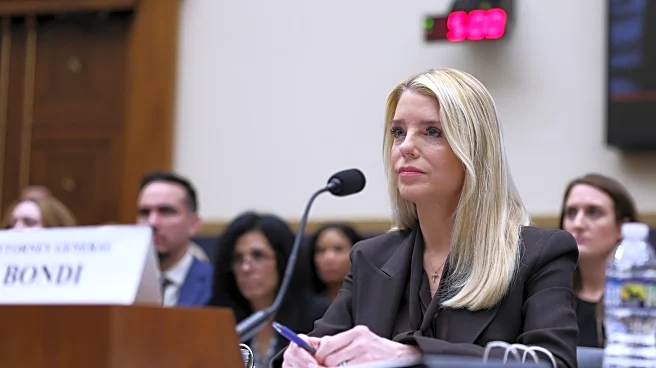
This development follows the recent availability of unredacted Epstein materials to legislators under the Epstein Files Transparency Act. The controversy arose when photographs revealed that U.S. Attorney General Pam Bondi possessed a document listing files accessed by Representative Pramila Jayapal during her review of the materials. Congressman Jamie Raskin, a leading Democrat on the House Judiciary Committee, has criticized the DoJ's actions as a violation of the separation of powers and plans to request an inquiry by the department's inspector general. The DoJ has confirmed that it logs all searches made by lawmakers to prevent the release of victim information, but this practice has been described by some legislators as a form of surveillance.
Why It's Important?
The situation underscores significant concerns about the balance of power between the legislative and executive branches of the U.S. government. The tracking of congressional research activities by the DoJ raises questions about privacy and the potential misuse of power. This issue could impact the trust and cooperation between Congress and the DoJ, potentially affecting future legislative oversight and investigations. Lawmakers argue that such monitoring could deter them from conducting thorough investigations, thereby hindering their ability to perform their duties effectively. The controversy also highlights ongoing tensions surrounding the handling of the Epstein case and the transparency of related investigations.
What's Next?
The call for an inquiry into the DoJ's practices is likely to lead to further scrutiny and debate within Congress. If an investigation is launched, it could result in changes to how sensitive information is handled and accessed by lawmakers. Additionally, the situation may prompt discussions about the need for clearer guidelines and protections regarding the separation of powers and the privacy of congressional activities. The outcome of this controversy could influence future interactions between Congress and the DoJ, as well as the broader public's perception of governmental transparency and accountability.