



What's Happening?
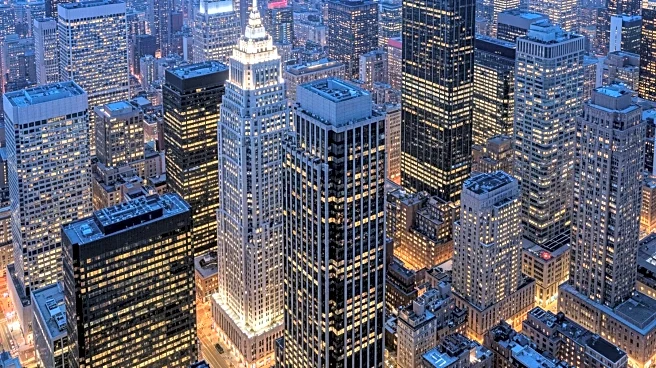
A recent visualization ranks New York City as the 22nd largest city globally by population in 2025, with 13.9 million residents. The data, sourced from the UN World Urbanization Prospects 2025 report, highlights the dominance of Asian megacities like
Jakarta, Dhaka, and Tokyo. While Asia remains the epicenter of urban growth, rapid expansion is also occurring in Africa and South Asia. The visualization underscores the ongoing trend of urbanization, driven by migration and economic opportunities, while also noting the challenges faced by mature cities experiencing slower growth due to aging populations and limited space.
Why It's Important?
The ranking of New York City among the world's largest cities reflects broader global urbanization trends. As cities continue to grow, they face challenges related to infrastructure, housing, and resource management. For the U.S., understanding these dynamics is crucial for planning and policy development, particularly in addressing issues like housing affordability and transportation. The data also highlights the shifting centers of population growth, with implications for global economic and political power. As urban areas expand, they become critical hubs for innovation and economic activity, influencing global markets and international relations.
Beyond the Headlines
The visualization of global city populations also raises questions about sustainability and quality of life in megacities. As urban areas grow, they must balance development with environmental concerns, such as pollution and resource consumption. The data prompts consideration of how cities can innovate to accommodate growing populations while maintaining livability. Additionally, the trends in urbanization may influence migration patterns, with potential impacts on cultural and social dynamics within cities. Understanding these factors is essential for policymakers and urban planners as they navigate the complexities of modern urban growth.