
What's Happening?
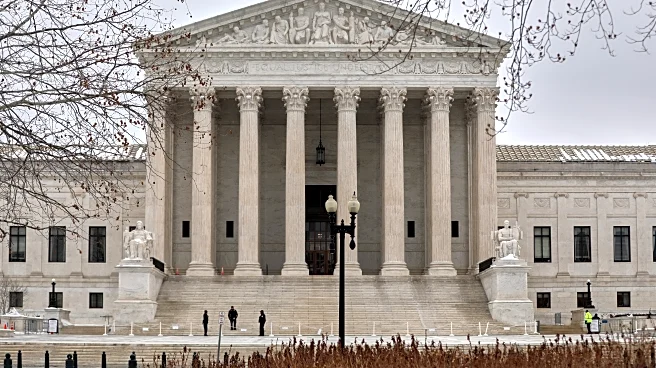
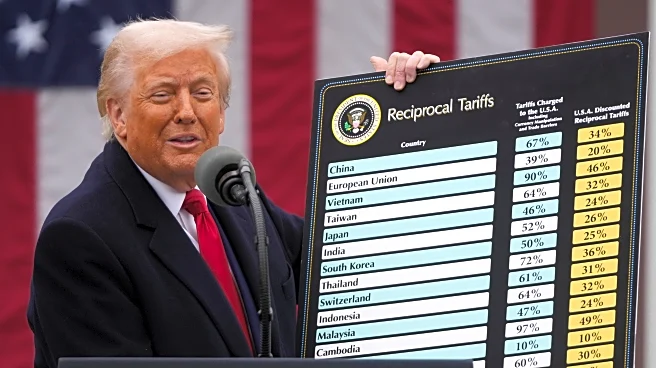
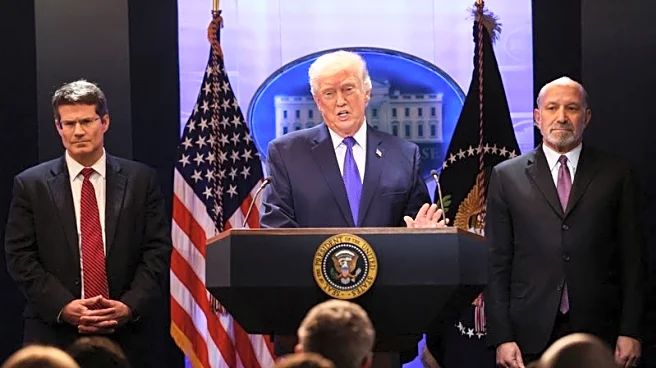
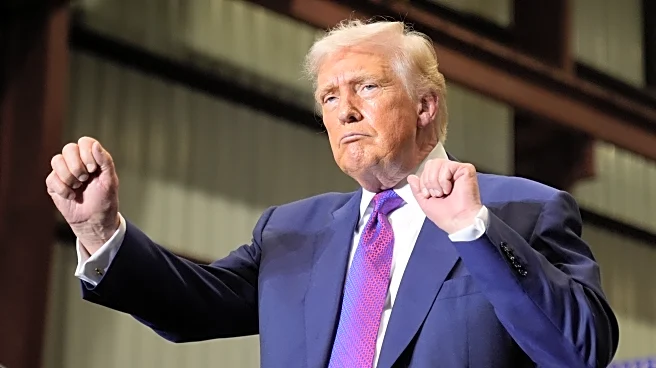
President Trump expressed strong disapproval of the Supreme Court's decision to strike down his administration's tariffs during a recent news conference. He stated that he is 'absolutely ashamed' of the justices who voted against the tariffs, which were
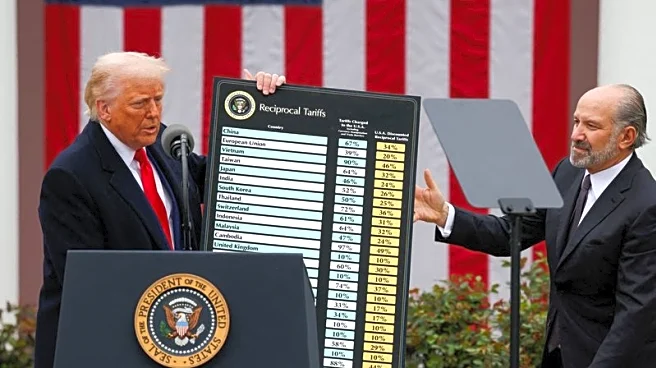
part of his broader trade policy. The tariffs, which had been implemented to protect American industries and jobs, were deemed unconstitutional by the court, leading to their nullification. This ruling represents a significant setback for President Trump's trade agenda, which has been a cornerstone of his economic policy.
Why It's Important?
The Supreme Court's decision to overturn the tariffs has significant implications for U.S. trade policy and the economy. The tariffs were designed to protect domestic industries from foreign competition, particularly in sectors like steel and aluminum. Their removal could lead to increased competition from international producers, potentially affecting American jobs and businesses. This ruling also highlights the ongoing tension between the executive branch and the judiciary, as well as the challenges faced by the administration in implementing its trade policies. The decision may influence future trade negotiations and the administration's approach to international economic relations.
What's Next?
Following the Supreme Court's ruling, the administration may seek alternative measures to support domestic industries, possibly through legislative action or new trade agreements. The decision could also prompt a reevaluation of the administration's trade strategy, as it seeks to balance protectionist policies with international trade obligations. Additionally, the ruling may lead to increased scrutiny of the administration's use of tariffs and other trade tools, potentially influencing future policy decisions. Stakeholders, including industry groups and trade partners, will likely monitor the administration's response closely.