




What's Happening?
Oil prices have surged above $110 per barrel as the deadline set by President Trump for Iran to reopen the Strait of Hormuz approaches. The ongoing conflict in the Middle East has disrupted oil supplies, causing market volatility and inflation concerns.
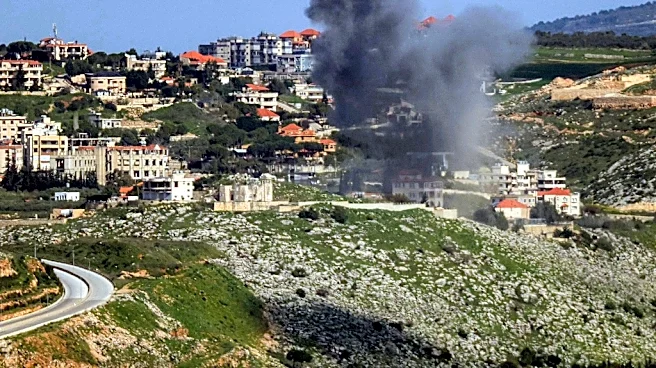
The U.S.-Israel war with Iran has led to the closure of the Strait, a critical oil transit chokepoint. Investors are on edge as the deadline looms, with no resolution in sight. The situation has led to a risk-off sentiment in global markets, with the U.S. dollar strengthening and oil prices rising.
Why It's Important?
The surge in oil prices has significant implications for the global economy, particularly in terms of inflation and energy costs. The conflict and potential escalation could further disrupt oil supplies, exacerbating inflationary pressures and impacting economic growth. The situation highlights the geopolitical risks associated with energy markets and the need for diversified energy sources. The outcome of the deadline and potential military actions could have far-reaching consequences for global stability and economic conditions.
What's Next?
As the deadline approaches, diplomatic efforts may intensify to prevent further escalation. However, the potential for military action remains, which could lead to significant disruptions in global oil supplies. Stakeholders, including governments and businesses, are closely monitoring the situation, preparing for various scenarios. The resolution of the conflict and reopening of the Strait are critical to stabilizing markets and ensuring energy security.