







What's Happening?
Rural-serving colleges in the U.S. are implementing creative solutions to support their student parents, who constitute a significant portion of their student body. A recent report from The Institute for College Access & Success (TICAS) indicates that
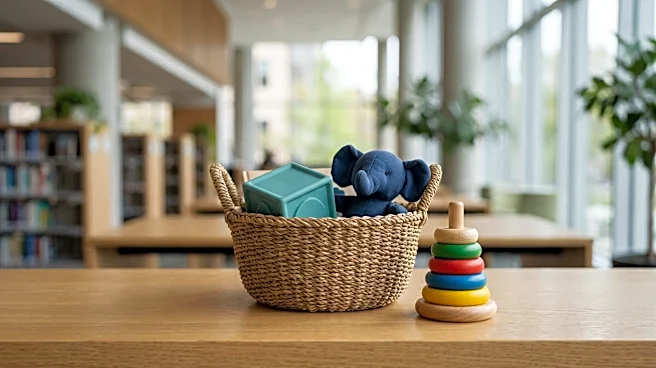
approximately a quarter of students at rural institutions are parents, yet these colleges are less likely to offer on-campus childcare compared to their urban counterparts. This disparity often leads to feelings of isolation among student parents. In response, institutions like New River are establishing initiatives such as dedicated family study rooms with child-sized furniture and hosting events for students and faculty with children. Stephanie Addikis, an adult career coach and community outreach specialist at New River, noted the high utilization of 'busy boxes' filled with toys, highlighting an previously underestimated presence of children on campus. The lack of comprehensive data on parenting students remains a significant challenge, though some states are beginning to mandate data collection on student parental status.
Why It's Important?
The initiatives by rural colleges to support student parents are crucial for addressing educational equity and workforce development in rural areas. Student parents are often more likely to be students of color, low-income, and first-generation college attendees, making them a vulnerable population with lower graduation rates than their non-parenting peers. By providing resources like childcare and creating a more inclusive campus culture, these colleges can significantly improve retention and graduation rates for this demographic. This, in turn, strengthens the local workforce and economy, as educated parents are better equipped to secure stable employment and contribute to their communities. The focus on 'rural ingenuity'—the capacity of rural people and organizations to solve problems with limited resources—underscores the importance of localized, creative solutions in overcoming systemic disadvantages and fostering community well-being.
What's Next?
The trend of rural colleges developing innovative support systems for student parents is expected to continue, with a growing emphasis on data collection and collaborative partnerships. As more states mandate the tracking of student parental status, colleges will gain a clearer understanding of the specific needs of this population, enabling more targeted and effective interventions. Furthermore, institutions are likely to expand collaborations with local churches, women's shelters, and non-profit organizations like United Way to connect student parents with a broader range of resources. The success of programs like New River's 'busy boxes' and family-friendly spaces may inspire other rural colleges to adopt similar low-cost, high-impact solutions. The ongoing development of 'rural ingenuity' will be key in adapting to changing demographics and ensuring that rural communities can build capacity and achieve well-being despite limited resources and external economic pressures.
Beyond the Headlines
The challenges faced by student parents in rural areas highlight broader societal issues related to childcare accessibility, educational support systems, and the unique demographic shifts occurring in rural America. The concentration of older adults in rural areas, as young adults often leave for urban centers, creates a demographic imbalance that impacts healthcare needs and workforce availability. By supporting student parents, rural colleges are not only addressing immediate educational needs but also investing in the long-term vitality of their communities by retaining younger families and fostering a more robust local economy. The emphasis on 'rural ingenuity' also speaks to a cultural shift, recognizing the inherent problem-solving capabilities within these communities. This approach moves beyond simply 'making do with less' to actively shaping the future through collaboration and strategic utilization of local assets, ultimately contributing to stronger, healthier rural communities.