






What's Happening?
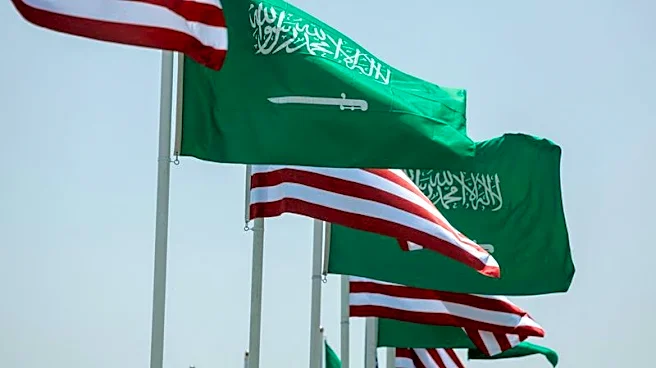
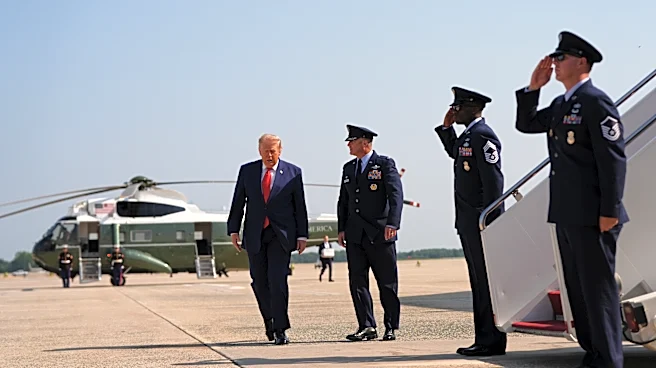
President Trump announced that a new nuclear agreement with Saudi Arabia requires the kingdom to normalize relations with Israel through the Abraham Accords. The deal, which focuses on a civilian nuclear program, does not allow for uranium enrichment,
but nonproliferation experts have expressed concerns over the lack of safeguards to prevent enrichment to weapons-grade levels. The agreement, expected to last 30 years, involves U.S. firms in developing Saudi Arabia's nuclear program. The Saudi government has not commented on the requirement to join the Abraham Accords, which is seen as a critical step for regional stability. The deal is subject to congressional review and does not include the International Atomic Energy Agency's Additional Protocol for enhanced monitoring.
Why It's Important?
This agreement is pivotal as it could reshape Middle Eastern geopolitics by potentially bringing Saudi Arabia into the Abraham Accords, thereby normalizing relations with Israel. Such a move could enhance regional stability and economic cooperation. However, the absence of strict nonproliferation measures raises concerns about nuclear proliferation in the region, particularly in light of Iran's nuclear activities. The deal also underscores the U.S.'s strategic interest in maintaining influence in the Middle East, especially in competition with other global powers like China and Russia, who are also potential partners for Saudi Arabia's nuclear ambitions.
What's Next?
The agreement will be reviewed by Congress, which could influence its final implementation. The outcome of this review will be crucial in determining the future of U.S.-Saudi relations and the broader Middle Eastern geopolitical landscape. Additionally, the potential normalization of Saudi-Israeli relations could lead to further diplomatic developments in the region, impacting the dynamics of the Israeli-Palestinian conflict and broader Arab-Israeli relations.