
What's Happening?
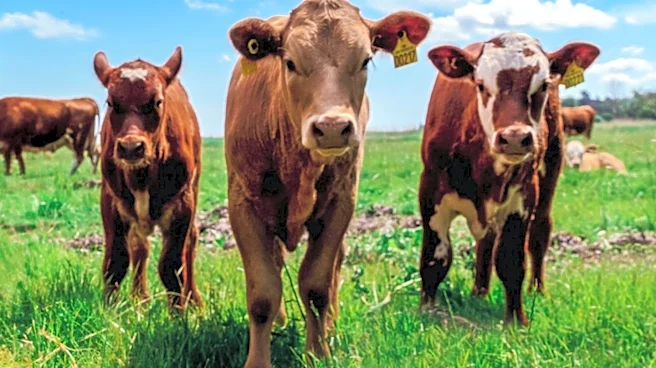
U.S. livestock farmers are facing significant challenges in preparing for winter due to widespread drought conditions, with 52% of the nation's beef cow herd located in drought-affected regions. These
dry conditions are severely impacting water supplies, pastures, and land used for growing feed, which are crucial resources for sustaining animals through the colder months. States like Nebraska, Colorado, and Wyoming are experiencing particularly harsh conditions, with over 70% of their pastures rated as poor or very poor. Central and southern Illinois also report abnormal dryness or moderate to severe drought across roughly seven-tenths of the state. This situation forces ranchers to dip into winter feed stores earlier than usual, increasing financial strain as they often purchase this feed rather than growing it. The U.S. Drought Monitor indicates that 48% of acreage dedicated to hay and winter wheat nationwide is under drought, further exacerbating the feed production crisis. Additionally, 42% of the U.S. sheep inventory is also in drought-affected areas, highlighting a broader impact across the livestock industry.
Why It's Important?
The ongoing drought poses a substantial threat to the U.S. cattle industry's financial viability and the long-term stability of the nation's beef supply. With over half of the beef cow herd in drought-stricken areas, ranchers face increased costs for feed and water, potentially leading to reduced herd sizes or early culling if conditions do not improve. This could result in tighter beef supplies in the future and higher prices for consumers. The strain on feed production, particularly hay and winter wheat, affects not only cattle but also the broader livestock sector, including sheep. Andrew Coppin, CEO of Ranchbot, suggests that water scarcity could impede efforts to rebuild the declining U.S. cattle herd, which has implications for the industry's recovery and growth. The financial burden on individual ranchers, who must adapt their feeding strategies and potentially incur higher expenses, could lead to consolidation within the industry or force smaller operations out of business, altering the landscape of U.S. agriculture.
What's Next?
As winter approaches, U.S. livestock farmers will continue to grapple with the immediate challenges of securing adequate feed and water for their animals. The report does not specify immediate relief programs or changes in ranching practices, suggesting that individual ranchers will largely bear the brunt of these conditions. The long-term outlook for the U.S. cattle herd rebuilding efforts remains uncertain, as water scarcity and feed shortages could hinder growth. The USDA anticipates a 3.5% decline in October cattle placements, indicating tighter feedlot supplies in the coming months, which could influence market prices. Buyers are reportedly aggressive for quality cattle, especially for December and January deliveries, suggesting a competitive market for available livestock. The industry will likely monitor drought conditions closely, as any improvement or worsening will directly impact feed availability, herd management decisions, and ultimately, the supply and cost of beef.
Beyond the Headlines
The persistent drought conditions underscore the increasing vulnerability of the U.S. agricultural sector to climate-related challenges. This situation highlights the need for more resilient farming practices and potentially greater governmental support for drought mitigation and adaptation strategies. The financial pressures on ranchers could accelerate the adoption of advanced technologies for water management and feed optimization, or lead to shifts in regional livestock production. Furthermore, the impact on the cattle herd could have ripple effects on related industries, such as feed suppliers and meat processors. The long-term implications extend to food security and the economic stability of rural communities dependent on agriculture. This scenario also brings into focus the ethical considerations of animal welfare during extreme weather events and the sustainability of current livestock farming models in the face of a changing climate.