




What's Happening?
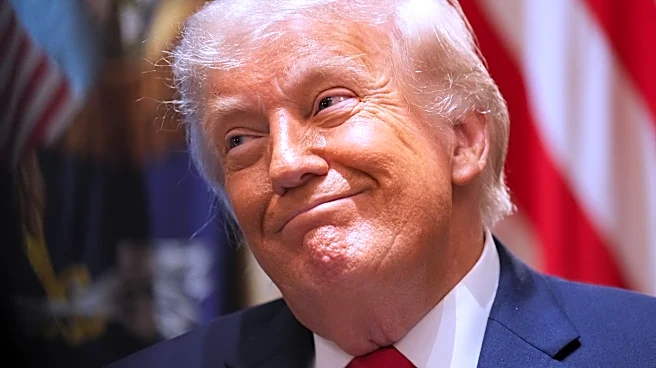
President Donald Trump has refiled a defamation lawsuit against The Wall Street Journal, accusing the publication of knowingly publishing false claims about his connections to the late Jeffrey Epstein. The lawsuit, filed in federal court in Miami, alleges
that a Journal article falsely described a birthday letter to Epstein that purportedly bore Trump's signature. Trump and his legal team assert that the letter is fabricated. The amended complaint includes new details, such as a claim that Rupert Murdoch, owner of the Journal, assured Trump he would 'handle it' regarding the article. The lawsuit names Murdoch, Dow Jones, News Corporation, and two Journal reporters as defendants. The original complaint was dismissed in April for failing to establish 'actual malice,' a legal standard requiring proof that the publication knowingly printed false information or acted with reckless disregard for the truth. Trump is seeking at least $10 billion in damages.
Why It's Important?
This lawsuit highlights ongoing tensions between President Trump and major media outlets, particularly concerning coverage of his alleged ties to Jeffrey Epstein. The case underscores the challenges public figures face in defamation suits, where proving 'actual malice' is a high bar. The outcome could have significant implications for media accountability and the legal standards governing defamation cases involving public figures. If successful, the lawsuit could embolden other public figures to pursue similar claims against media organizations, potentially impacting journalistic practices and freedom of the press. Conversely, a dismissal could reinforce the protections afforded to media outlets under the First Amendment.
What's Next?
The legal proceedings will continue as the court reviews the amended complaint. The defendants, including The Wall Street Journal and its parent companies, are expected to respond to the allegations. The case may prompt further scrutiny of the media's role in reporting on high-profile figures and their alleged connections to controversial individuals like Epstein. Observers will be watching to see if the court finds sufficient evidence of 'actual malice' to allow the case to proceed. The outcome could influence future defamation cases and the relationship between the media and public figures.