





What's Happening?
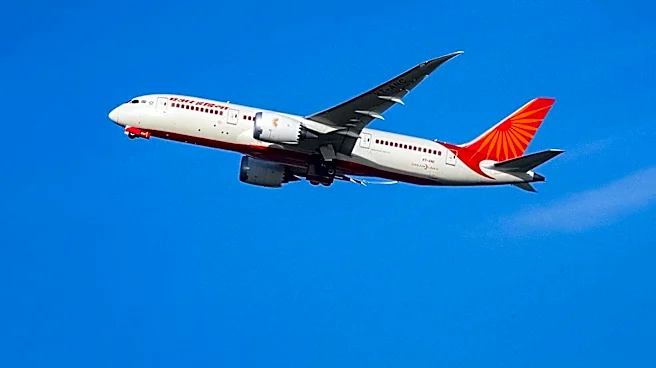
The U.S. government has reported that no abnormalities were found in the fuel control switch of the Air India Boeing 787 Dreamliner that crashed shortly after take-off from Ahmedabad on June 12, 2025. The crash resulted in the deaths of 260 people. Civil
aviation state minister Murlidhar Mohol informed the Rajya Sabha that the fuel control switch was examined at the Original Equipment Manufacturer (OEM) level in Seattle as part of continued airworthiness checks ordered by the Directorate General of Civil Aviation (DGCA). The examination found no issues with the structural integrity of the switch's locking detents. However, the complete thrust control module is still under inspection. The government has rejected claims of delays in the Aircraft Accident Investigation Bureau's (AAIB) final report, stating that major accident investigations are complex and cannot adhere to a fixed timeline.
Why It's Important?
The findings are significant as they address safety concerns related to the Boeing 787 Dreamliner, a widely used aircraft model. The absence of abnormalities in the fuel control switch may shift the focus of the investigation to other potential causes, such as pilot error or other technical malfunctions. This development is crucial for the aviation industry, as it impacts regulatory practices and safety protocols. The outcome of the investigation could influence future aircraft design and maintenance standards, affecting manufacturers, airlines, and passengers globally. The ongoing investigation underscores the importance of thorough and transparent safety checks in maintaining public trust in air travel.
What's Next?
The investigation into the Air India crash continues, with further examination of the thrust control module underway. The final report by the AAIB will be published once the investigation is complete, providing a comprehensive analysis of the crash's causes. This report will be crucial for implementing any necessary changes in aviation safety regulations. Stakeholders, including airlines, regulatory bodies, and the public, are likely to closely monitor the findings to ensure enhanced safety measures are adopted. The aviation industry may also see increased scrutiny and potential policy changes based on the investigation's conclusions.