








What's Happening?
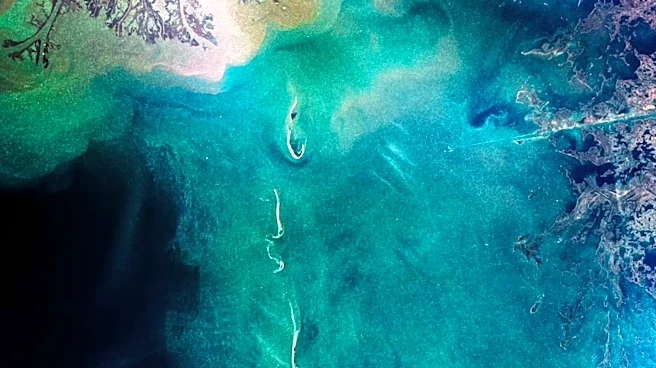
A recent study has revealed the dynamics of how the Congo River, the world's second-largest river by discharge, releases approximately 40,000 cubic meters of freshwater into the Atlantic Ocean every second. Researchers utilized a high-resolution computer
model, satellite observations, and sea measurements to track the movement of this freshwater. The study found that giant swirling ocean currents, known as mesoscale eddies, play a significant role in transporting the freshwater hundreds of kilometers into the open Atlantic. These eddies, which can last for weeks or months, trap and carry the freshwater in bursts rather than a steady flow. This movement has implications for ocean circulation, climate, marine ecosystems, and fisheries across the tropical Atlantic.
Why It's Important?
The findings of this study are crucial for understanding the broader impacts of freshwater discharge on oceanic and climatic systems. The Congo River's freshwater plume affects the distribution of heat, salt, and nutrients in the upper ocean, which in turn influences regional ocean circulation and climate patterns. The river also carries significant amounts of dissolved organic carbon and nutrients that support marine life, contributing to the productivity of the marine food web. By highlighting the role of mesoscale eddies in transporting these materials, the study provides insights into how oceanic processes redistribute resources across the tropical Atlantic, potentially affecting fisheries and marine biodiversity.
What's Next?
Future research is expected to expand on these findings by examining multiple years of data to understand how these processes vary annually. Upcoming high-resolution satellite missions will offer more detailed views of ocean currents, enhancing the understanding of freshwater transport dynamics. This continued research will be vital for predicting changes in ocean circulation and their potential impacts on climate and marine ecosystems.
Beyond the Headlines
The study underscores the importance of mesoscale ocean activity in the redistribution of freshwater and nutrients, which could have long-term implications for climate modeling and marine resource management. Understanding these processes is essential for developing strategies to mitigate the impacts of climate change on marine ecosystems and coastal communities.