








What's Happening?
A Harvard University study revealed that the 400 largest data centers in the United States annually release as much heat-trapping gas as the entire nation of Denmark. This assessment predates the recent surge in artificial intelligence (AI) development.
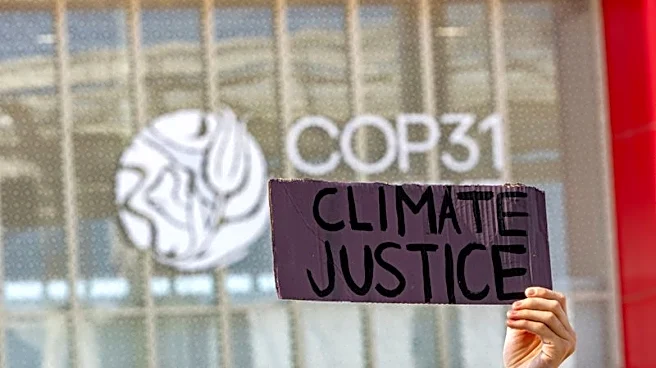
The study, published in Nature Sustainability, analyzed data from May 2024 to April 2025, estimating that these data centers consumed 82 terawatt hours of electricity, equivalent to powering nearly 7 million homes for a year. Over half of this electricity came from fossil fuels, leading to approximately 28.3 million tons (25.7 million metric tons) of carbon dioxide emissions. This figure is two to three times higher than previous estimates. Concurrently, at the United Nations COP31 climate talks in Antalya, Turkey, a voluntary pledge was launched, urging companies and countries to power data centers with clean energy and increase transparency regarding their power, water consumption, and emissions. United Nations climate chief Simon Stiell emphasized the need for immediate action over future promises, while COP31 President Murat Kurum highlighted the necessity of addressing AI's growing energy consumption.
Why It's Important?
The substantial environmental footprint of U.S. data centers, particularly their reliance on fossil fuels, poses a significant challenge to climate goals and public health. The Harvard study's findings underscore the escalating energy demands of the digital infrastructure, which are projected to worsen with the expansion of AI. This situation impacts U.S. industries by increasing operational costs associated with energy consumption and potentially leading to stricter environmental regulations. The voluntary 'Antalya Artificial Intelligence Pledge' at COP31 signals a global recognition of this issue, potentially influencing U.S. tech companies to adopt cleaner energy sources and more transparent practices. Failure to address these emissions could exacerbate climate change, leading to more frequent and severe climate disasters, and could also result in political backlash and local objections to new data center developments. Conversely, the pledge also highlights the potential for AI to contribute to climate solutions, creating opportunities for innovation in energy efficiency and renewable energy integration within the tech sector.
What's Next?
The 'Antalya Artificial Intelligence Pledge' calls for data centers to transition to clean power, implement efficient energy and water systems, and manage AI systems responsibly with environmental standards. Signatories are also encouraged to assess and share the environmental impacts of data centers and support AI's role in climate solutions. This initiative suggests a future where U.S. tech companies may face increased pressure from international bodies and advocacy groups to adopt more sustainable practices. The ongoing expansion of data centers, with plans for 2,000 more, indicates a continued rise in energy consumption and emissions unless significant changes are implemented. Experts like Fengqi You from Cornell University emphasize that the environmental impact of AI is not fixed and depends on factors such as data center location, operational efficiency, and electricity supply. This implies a future focus on strategic siting, technological advancements in cooling, and greater integration of renewable energy sources for data center operations. The debate between the potential of AI to solve climate issues and its current environmental cost will likely continue to shape policy and industry practices.
Beyond the Headlines
The environmental impact of data centers extends beyond direct emissions, encompassing ethical and societal dimensions. The study's revelation that current emissions estimates are significantly higher than previously thought highlights a lack of transparency from companies regarding their power consumption and pollution. This opacity raises questions about corporate accountability and the effectiveness of current environmental reporting mechanisms. The political backlash and local objections to new data center sites in the U.S. indicate a growing public awareness and concern about the environmental consequences of technological advancement. The discussion around AI's dual role—as both a contributor to pollution and a potential solution to climate change—presents a complex ethical dilemma. While figures like former U.S. Vice President Al Gore express optimism about AI's capacity to drive efficiency and reduce emissions, others remain skeptical, fearing that the promise of future solutions might overshadow current harms. This tension underscores the need for a balanced approach that prioritizes immediate environmental mitigation while also investing in AI's potential for sustainable innovation. The concept of capturing waste heat from data centers for reuse in homes and businesses, as explored by companies like Danfoss and BaRupOn, represents a promising long-term shift towards a more circular economy within the digital infrastructure sector.